Logo image

RefluxStop Surgical Procedure for GERD | MIC Hospital, Berlin, Germany

RefluxStop Surgical Procedure for GERD | MIC Hospital, Berlin, Germany
9.70

Berlin, Germany

5
User ScoreRatingMedia Files
98%9.7/105

Overview

Age group

Adults

Type of care

Inpatient, Outpatient

Method

Surgical

About the offer

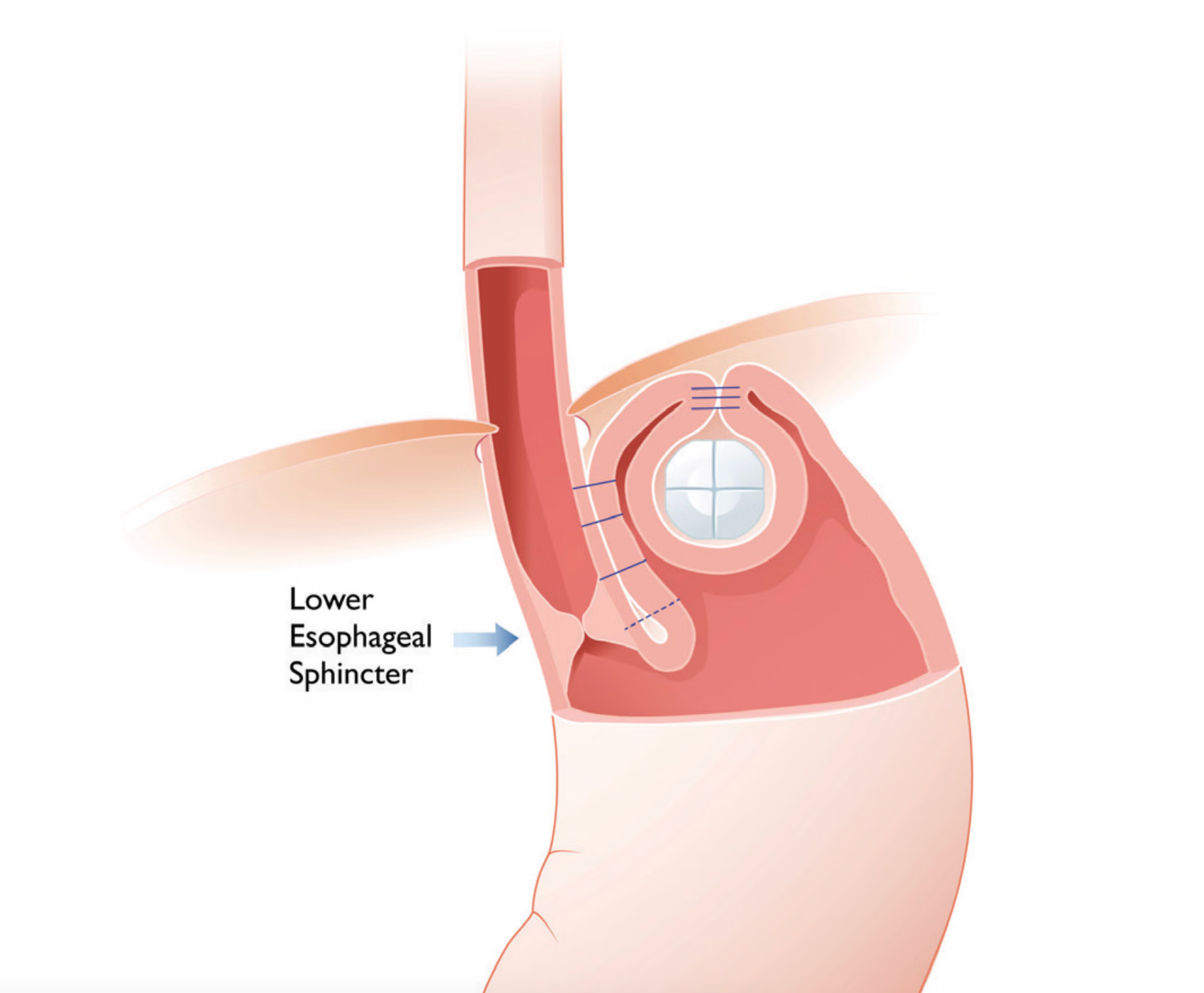
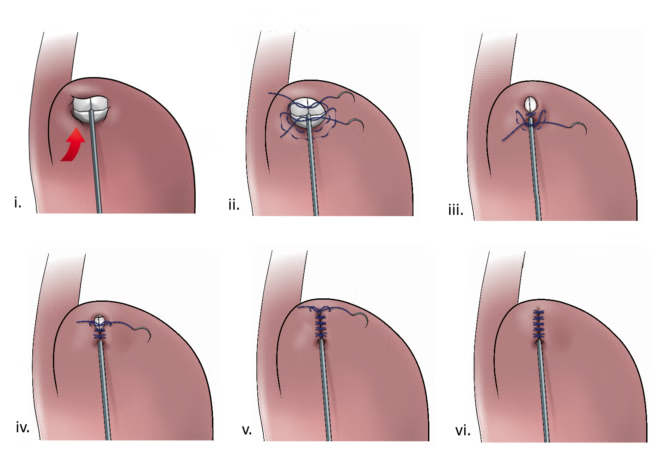
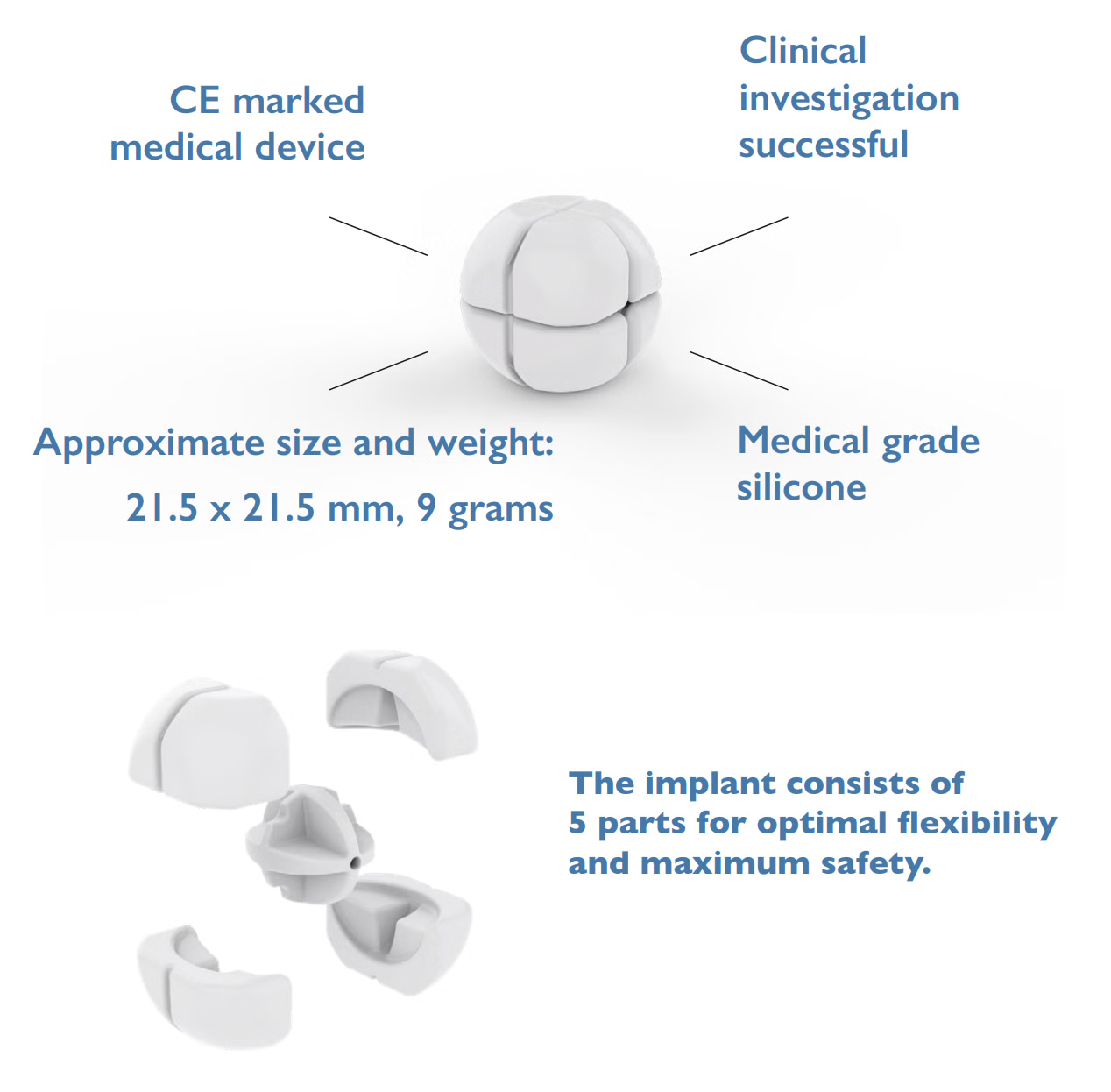
RefluxStop surgery is a minimally invasive laparoscopic procedure designed to treat gastroesophageal reflux disease (GERD). This operation repositions the gastroesophageal junction to a stable location beneath the diaphragm. During the procedure, a small, inactive implant is placed on the upper stomach, but it is not wrapped around the esophagus. The procedure is performed under general anesthesia, utilizing minimally invasive "keyhole" access. The surgery typically lasts around one hour. A critical initial step is to reduce any hiatal hernia. The distal esophagus is mobilized, to position the lower esophageal sphincter complex within the abdomen. The surgeon focuses on achieving adequate intra-abdominal esophageal length while minimizing tension. The next step is to repair the diaphragmatic hiatus, typically via a procedure called cruroplasty. This repair is carefully calibrated to restore the opening without over-tightening, thereby reducing the risk of postoperative swallowing difficulties due to constriction. Following this, the gastric fundus is mobilized, and the short gastric vessels may be divided. Dissection is then continued posteriorly toward the angle of His, aiming for a tension-free, "floppy" fundus. This increased mobility facilitates the reconstruction of the regular junction geometry and helps create a stable pocket for the implant. Rather than performing a full circumferential wrap, this operation focuses on reconstructing the angle of His and establishing a limited attachment between the stomach and the esophagus. This approach involves partial plication rather than complete fundoplication, aiming to support a functional flap valve without encircling the esophagus. After reconstructing the junction, the implant is introduced and placed into a pocket formed by the outer stomach wall and surrounding tissue. The implant is fully covered by stomach tissue and is not left exposed in the abdomen; it is also not positioned as a ring around the esophagus. Functionally, the implant acts as a mechanical “stop,” helping to prevent the gastroesophageal junction and sphincter region from sliding upward into the chest. This supports a stable position for the intra-abdominal sphincter. Notably, the food passageway remains unencircled. The implant height and the pocket construction are critical technical aspects. If the implant is placed too low, it can lead to persistent reflux. The placement is typically aimed to be high enough to block upward movement during breathing and straining. Additionally, proper pocket closure is essential. If the closure is too tight, it may increase the risk of tissue injury and device-related complications. An appropriately snug closure is designed to secure the implant without exerting excessive pressure on the stomach wall. Recovery is usually relatively fast compared with open surgery. Discharge typically occurs within a few days, depending on the patient’s course.

What’s included

Medical service

Examination
  • clinical history-taking
  • medical records review
  • physical examination
  • consultation with a surgeon
  • consultation with an anesthesiologist
Laboratory tests
  • complete blood count (CBC)
  • blood type test (ABO, Rh)
  • biochemical analysis of blood (kidney and liver function tests, electrolytes, glucose)
  • inflammation blood tests
  • coagulation studies
  • urinalysis
Diagnosis
  • upper endoscopy
  • ambulatory reflux monitoring
  • esophageal manometry
  • barium swallow/contrast esophagram
  • electrocardiogram (ECG)
  • chest X-ray
Treatment
  • pre-procedure patient preparation
  • laparoscopic RefluxStop surgical procedure
  • post-procedure care
  • symptomatic treatment
Other
  • cost of essential medicines
  • cost of essential materials
  • cost of the RefluxStop implant
  • general anesthesia
  • hospitalization
  • nursing service
  • discharge medical records
  • further recommendations

Extra add-ons

Local transportation
Airport transfer
Single room
Hospital meals
Personal coordinator

AiroCare

AiroMedical support
Payment protection
Patient advocacy
Price match

Meet the provider

Dr. med. Björn Siemssen

general & visceral surgery, proctology, reflux & hernia

9.70
Excellent

Gallery

Customize this offer

If you're not seeing exactly what you need here, send your custom request. You can discuss the content, specifics, price & timeline to create a personalized plan.

FAQ

What is RefluxStop surgery?

It is a laparoscopic anti-reflux operation that repositions the lower esophagus/sphincter below the diaphragm, repairs any hiatal hernia, and places a small, non-active silicone implant on the outside of the upper stomach wall to help keep the junction from sliding upward.

How is RefluxStop different from Nissen fundoplication?

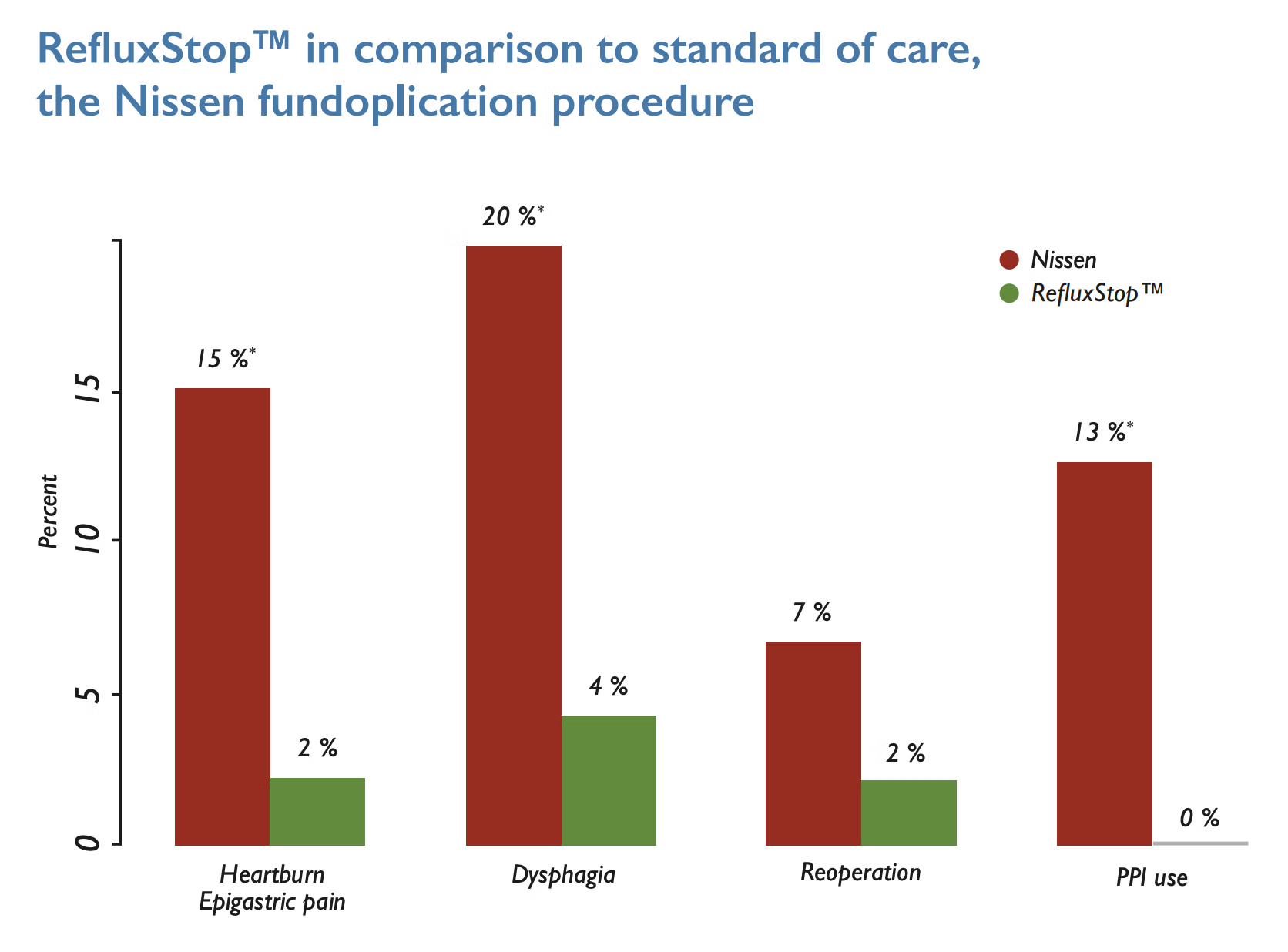
RefluxStop is designed to treat reflux without wrapping the stomach around (and compressing) the esophagus, aiming to reduce side effects associated with an encircling wrap.

Where is the implant placed?

It is positioned on the outside of the upper stomach and invaginated/covered by stomach wall tissue rather than placed as a ring around the esophagus.

Does the implant contain electronics or active components?

No. It is described as a non-active implant (no electronics).

What is the implant made of?

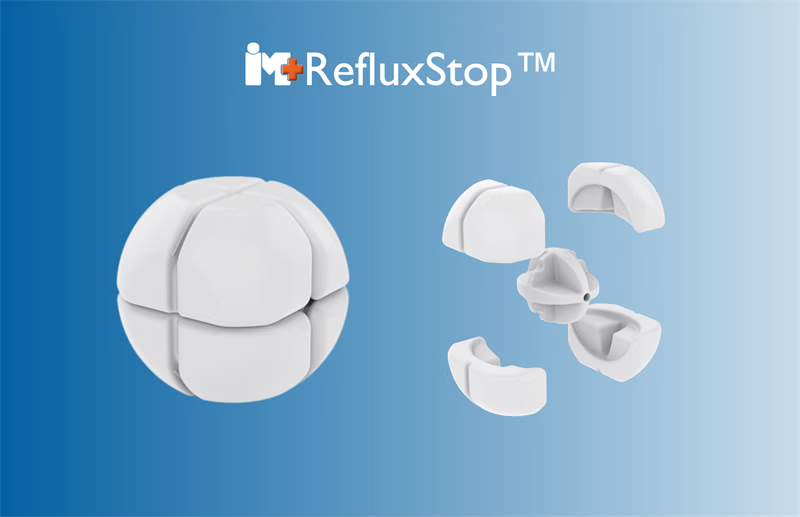
Implantica describes it as medical-grade silicone and notes it is visible on X-ray.

Is it MRI-safe after RefluxStop surgery?

MRI is possible without restrictions, and trial documentation describes the implant as magnetic resonance-safe.

How does RefluxStop reduce reflux?

The concept is to keep the lower esophageal sphincter in its natural intra-abdominal position and prevent it from “gliding” back into the chest, where it tends to function poorly.

Does RefluxStop also repair a hiatal hernia?

Yes. The hiatal hernia present is repaired as part of the procedure.

How long does the surgery take?

It typically lasts about an hour on average (under general anesthesia).

Is this always minimally invasive?

It is described as a minimally invasive “keyhole” laparoscopic procedure.

When can I return to work?

Many patients take about two to three weeks off work, but this varies by job and the surgeon's instructions.

When can I exercise or lift heavy objects again?

Doctors advise avoiding strenuous exercise and heavy lifting for the first six weeks, unless your surgeon advises otherwise.

When can I eat normally again?

A liquid diet is recommended for a short period immediately after surgery, with a gradual return to a regular diet per your surgeon’s plan.

Will I have trouble swallowing after surgery?

RefluxStop is designed not to encircle the food passageway, and the brochure notes that swallowing problems may improve over time for many patients who had them preoperatively.

How common is longer-term dysphagia in published studies?

In a 5-year multicenter trial report focused on food-passage outcomes, most participants reported no dysphagia-related adverse events over follow-up, and no esophageal dilations were performed during the study period.

Will the surgery reduce my stomach size or appetite?

Stomach volume reduction is minimal and should not affect appetite.

How successful is RefluxStop at reducing reflux symptoms and medication use?

Published trial follow-up reports show substantial reductions in GERD symptom scores and high rates of stopping daily PPIs in study cohorts, but individual outcomes vary.

Can I expect to stop PPIs?

Many patients in published cohorts discontinued regular daily PPIs. Still, you should treat this as a goal rather than a guarantee, and only stop medication as directed by your surgeon or gastroenterologist.

Who is a typical candidate?

In general, candidates are people with objectively confirmed reflux and persistent symptoms or medication concerns, after specialist evaluation, and after alternatives have been considered.

What tests are commonly done before RefluxStop?

Workup often includes endoscopy, objective reflux testing (e.g., 24-hour pH monitoring), and imaging, such as contrast swallow studies, when hernia/anatomy needs definition.

Can the implant be removed if necessary?

The patient brochure implies re-operation is normally possible; the specifics of device removal or revision are surgeon-dependent and scenario-specific.

How long is the implant expected to last?

The brochure states it is expected to last a lifetime, but real-world durability ultimately depends on long-term follow-up and individual factors.

What are the most common general risks (not device-specific)?

As with other laparoscopic foregut operations, risks include bleeding, infection, injury to nearby structures, anesthesia risks, and hernia recurrence; your surgeon should provide institution-specific consent language.

Will I have scars?

Most patients have several small laparoscopic incision scars; the exact number/placement depend on the technique.

What is the rating of the offer?

RefluxStop Surgical Procedure for GERD | MIC Hospital, Berlin, Germany is rated as 9.70 by AiroMedical.

Who is offering a deal?

The provider is Dr. med. Björn Siemssen.

How long does the offer take?

The offer is designed for 7 days.

Does the offer require you to stay in the clinic overnight?

RefluxStop Surgical Procedure for GERD | MIC Hospital, Berlin, Germany requires a mixed stay. Therefore, some parts of the offer are carried out on an outpatient basis. At the same time, some parts might require hospitalization.

Where can I see the media files?

What are the age restrictions?

The offer is eligible only for adults.

Can I customize the content of the offer?

Yes, the components of the deal can be changed. Get in touch with a vendor to create a personalized proposal.

Does the offer include extra services?

RefluxStop Surgical Procedure for GERD | MIC Hospital, Berlin, Germany has 13 add-ons and unique AiroCare services for AiroMedical users.

Individual cost estimate. Non-binding 100% free assessment.
On request

Similar deals