
Medical Treatment in Poland for Foreigners
Having a treatment in Poland for foreigners is no longer a niche option. Over the last decade, the country has quietly grown into one of Europe’s busiest hubs for cross-border care, welcoming an estimated 400,000 to 480,000 international patients every year.[1][2] The precise number is less significant than the trend: Poland has become a popular choice for people from Europe, the UK, and beyond seeking EU-standard medical care at lower prices.[3]
At the same time, Poland is not just a “cheap” alternative. The country has one of the highest hospital-bed densities in the OECD.[4][5] That high capacity, combined with quite advanced specialist centres and a growing private sector, is precisely what many foreign patients feel when they arrive. There is room for you, literally and figuratively.
Check what treatment in Poland means for foreign travelers and why so many patients come here to solve different healthcare issues.
Features of Healthcare in Poland for Foreigners
Moving to a new country or just traveling for medical treatment often means navigating an unfamiliar healthcare system, and Poland is no different. It's essential to understand how healthcare in Poland works for expats, especially tourists, so you and your family can access the care you need.
While the healthcare spending as a percentage of GDP is typically lower than the OECD average (it was around 8.1% in 2024, compared to a higher average), the system is constantly evolving.[6][7] The significant funding injections are planned to increase efficiency, quality, and Poland's healthcare ranking.
Polish Healthcare System Overview
Poland runs a universal healthcare system based on compulsory health insurance. In simple terms, if you are insured, you have a legal right to have medically necessary treatment in Poland in the public system.[10] The European Observatory on Health Systems and Policies describes Poland's social health insurance system as universal, covering almost all residents.[8][9]
Older system reviews estimate that compulsory health insurance reaches about 97-98% of the population, which gives you an idea of how widely local people use the system.[11]
The backbone of Poland's healthcare system is a decentralized, mandatory social health insurance model. It is managed by the National Health Fund (Narodowy Fundusz Zdrowia, NFZ), which is the sole public payer.[12]
Healthcare Financing
The public system is primarily financed through mandatory health insurance contributions, which are collected by the Social Insurance Institution (ZUS) and pooled by the NFZ.[13]
However, despite this widespread coverage, Poland has a relatively high level of out-of-pocket payments compared to many European peers, accounting for just over 20% of current health expenditure.[14][15] It is often due to costs for non-covered services, such as most dental care, or to co-payments for medicines.
Poland's Healthcare Cost Input
In terms of overall money going into healthcare:
- Public spending on health was 6.5% of GDP in 2019, clearly below the EU average;[16]
- Overall health expenditure (public + private) reached about 6.7% of GDP in 2022, still well under the OECD average of around 9.2%;[17][18]
- More recent analyses based on the latest OECD data suggest that with the post-COVID spending push, total health spending has climbed to just over 8% of GDP, bringing Poland closer to the OECD middle of the pack.[19]
So Poland still spends less on health than richer Western European countries, but the trend is clearly upwards.
For medical tourists and expats, this is precisely where the value appears. The underlying public system continues to train doctors, regulate quality, and finance core services. Meanwhile, private clinics have learned to build clear, all-inclusive packages on top of it, and to keep their prices attractive. Because everyone seeking treatment in Poland knows there is a cheaper public option if you are willing to wait. That competitive pressure is one of the reasons surgery or complex dental work in Poland often costs thirty to fifty percent less than in Western Europe, despite happening in modern, EU-regulated facilities.
Public vs Private Hospitals
On paper, the line between “public” and “private” in Poland is not about who can treat whom. Any clinic, whether owned by the state or a company, can treat privately insured patients. That’s quite different from systems where public and private live in separate worlds.
Statutory hospitals generally account for 60-65% of all hospitals in Poland, while private clinics make up 35-40% of all medical centres.[20][21][22]
In reality, though, they have ended up with different personalities. Most of the country’s big general hospitals and university centres are publicly owned by regions, counties, or medical universities. They hold the majority of hospital beds and handle most emergency and highly complex cases like severe trauma, major cancer surgery, and complicated cardiac interventions. If you have a sudden stroke in Warsaw or a car accident in Silesia, this is where you go.[20][21][23]
Private hospitals tend to be smaller and more specialised. Over the last decade, they have popped up in cities like Warsaw, Kraków, Wrocław, Gdańsk, and Katowice, often focusing on a handful of high-demand areas: metabolic surgery, orthopaedics and sports medicine, ophthalmology, plastic surgery, and fertility offerings.[24] There are plenty of private dental clinics, ranging from single-chair practices to large implantology centres. Many of these facilities, a growing part of their work is purely commercial, targeted at self-paying locals and foreigners.
Medical specialists in Poland navigate both sides. It’s common for a surgeon to operate during the day in a large public clinic and then see private patients in the evening at a clinic around the corner.[25][26] From an international patient’s point of view, that can be a real bonus: you may be treated by the same professor who leads a department in a university hospital, but in a setting that is quieter, more hotel-like, and more flexible with scheduling.
Safety & Accreditation
Of course, none of the above would matter if the medical treatment in Poland did not take safety seriously. The country has spent years building a formal quality and accreditation framework. The heart of it is the national accreditation programme run by the Centre for Quality Assessment in Healthcare.[15]
Polish clinics that volunteer for accreditation undergo a detailed external audit that examines everything from patient identification and informed consent to infection control, medication management, emergency procedures, and how they learn from mistakes.[15][27] The standards are quite granular: hundreds of individual criteria grouped into areas such as surgery, anaesthesia, diagnostics, and management, and accreditation is granted only if a hospital achieves a high overall score. It is time-limited, which means hospitals have to invite inspectors back and prove, again and again, that they are keeping up.
Alongside this national system, many private clinics add international layers. ISO 9001 quality management certificates are standard among better Polish hospitals and day surgery centres.[28] To keep those, they must show regular internal audits, documented processes, and clear responsibilities. Some facilities that focus strongly on medical tourism also seek specialised labels such as TEMOS or Polish Medical Tourism Association, which emphasise clear contracts & pricing, and support for international patients.[29][1]
Insurance Details
Polish citizens and legal residents are usually covered through employment, social security, or voluntary NFZ contributions, giving them broad access to publicly funded services.[30][31]
EU/EEA and Swiss citizens can use a valid European Health Insurance Card (EHIC) to receive medically necessary treatment in Poland in NFZ-contracted facilities during a temporary stay, under the same rules as locals.[32][33]
Non-EU residents may gain NFZ coverage if they live and work in Poland or pay voluntary contributions; otherwise, they are treated as private patients.[30][34] Similarly, healthcare in Poland is available to tourists without NFZ rights. They are expected to have travel or private health insurance and to pay for care directly, especially in private clinics.
Healthcare Issues
Poland’s healthcare system combines solid medical expertise with some stubborn structural problems often grouped under the label “Poland healthcare issues.” The main concerns are underfunding of the public sector, shortages of doctors and especially nurses, and long waiting times for many specialist visits and procedures.[35][36]
International comparisons also point to relatively low health spending per person, high out-of-pocket payments, and weaker prevention and early detection than in Western Europe.[15]
These Polish healthcare issues have helped the private sector grow quickly, as both locals and foreigners turn to private clinics to bypass queues, improving access for those who can pay, but also risking deeper gaps between public and private care.[37][38]
Healthcare System Ranking
When you look at Poland's healthcare system ranking across Europe and globally, the country usually lands in the middle of the table.[39][40] This means not among the very top performers, but clearly not at the bottom either.
Recent comparative reports and indices that inform Poland's healthcare system ranking from 2024 to 2026 consistently paint a similar picture.[9] Poland scores relatively well on hospital capacity, cardiology, and access to high-tech procedures. Still, it loses points on long waiting times, staff shortages, and lower health spending per person.[5]
In broader healthcare rankings and medical tourism indices, Poland often appears in the mid-range worldwide, yet near the top tier for value, combining decent clinical quality and EU regulation with significantly lower treatment prices than many neighbouring countries.
Advantages of Treatment in Poland
Poland sits in an interesting sweet spot. It’s a large European country with extensive medical infrastructure, but living and labour costs are still far lower than in Western Europe. For a foreign patient, that usually translates into three things you really care about:
- You can actually get a slot (access);
- Get European-level medicine (quality);
- Pay much less than you would at home or in more expensive destinations (money).
Healthcare Access in Poland for Foreigners
First, there’s sheer capacity. In 2023, the figure was about 6.27 beds per 1,000.[9] The country has plenty of hospital space, and it isn’t at capacity. That’s one reason specialist centres can take on foreign patients without pushing locals out.
Add to this a dense network of regional and university hospitals, plus hundreds of specialist units, and you get a map where almost any larger city can handle major surgery, advanced diagnostics, and intensive care.[9][41]
Waiting time for medical treatment in Poland for foreign patients is straightforward: you are buying a specific slot at a private or mixed hospital that deliberately allocates its spare operating-theatre time to self-pay and international patients. That’s why you often see offers like “consultation next week, surgery in three to six weeks” for spine or joint operations, or dental implants.
European Quality of Healthcare in Poland
Quality has also been recognised internationally. In the Medical Tourism Index, Poland has been placed among the top European destinations. Earlier studies ranked it 24th in the world and 5th in Europe, while more recent MTI summaries still keep Poland in the top 10 in the region, close to countries like Italy and Malta.[42][43] That’s based on destination environment, quality of facilities, and the maturity of the medical-tourism industry – not just on price.
A Polish government publication highlighted that foreign interest rose partly because of “excellent quality of healthcare in Poland” and growing competence in dealing with foreign patients.[44]
So while Poland spends less per person than Germany or France, it has used that money to build a high-capacity, EU-regulated system that feels very familiar to anyone who has ever walked through a Western European hospital.[9][45][46]
Developed Private Clinics
If you ask Polish analysts where the real energy in the system is, they point straight at the private sector. It hasn’t replaced public hospitals, but it has grown into a powerful complement – and that’s precisely where most foreign patients land.[47][48]
The official Country Health Profile notes that only about 15% of hospital beds in Poland are private (from approximately 300 private facilities), which means the public sector still carries the bulk of inpatient care. But those private beds are concentrated in highly specialised facilities.[9][47]
Financial Aspect
Multiple independent sources, as well as the Airomedical offering section, converge on the same range: most medical treatments in Poland cost 40–70% less than in the UK, Nordic countries, and much of Western Europe.[49][50]
Some comparisons get even more concrete. A cross-European price survey notes that medical care in Poland can be roughly 40% cheaper than in Spain, and that aesthetic surgery in Poland is about 50% cheaper than in the UK or Austria.[51] Dental-tourism providers say savings of up to 75% on complex dental work compared to British prices, depending on the clinic and the exact procedure.[50]
Treatment Fields & Specialties in Focus
For foreign patients, the country really shines in a cluster of elective procedures – especially dentistry, plastic surgery, infertility treatment, and bariatric surgery. These are the areas that fill airport lounges with people flying home with new knees, new smiles, or a long-hoped-for pregnancy test.
Elective Private Procedures
Elective procedures in Poland benefit from two structural advantages: there is plenty of clinic capacity, and the private sector has specialised heavily in the kinds of treatments foreign patients seek.
Dentistry & Implantology
Dentistry is the undisputed number one for incoming patients. A report prepared for the Polish Ministry of Foreign Affairs notes that dental services accounted for the largest share of visits, making dental care one of the flagship reasons to seek treatment in Poland.[44] Polish implantology has moved in step with Western Europe: digital impression scanning, guided surgery, same-day crowns, and full-arch “All-on-4/6” solutions are now standard in better clinics.
The very dense professional base that supports this demand. A corrected submission by the Polish Supreme Medical Chamber to Eurostat states that 42,425 dentists currently hold the right to practice in Poland, which translates into around 112 dentists per 100,000 inhabitants – a figure that puts Poland in the upper tier of EU countries by dentist density.[52]
Prices explain a lot of the cross-border traffic. Dedicated dental-travel providers advertise savings of up to 60–80% compared with UK prices, depending on the treatment.[53] This is the main reason for the popularity of dental healthcare in Poland for foreigners.
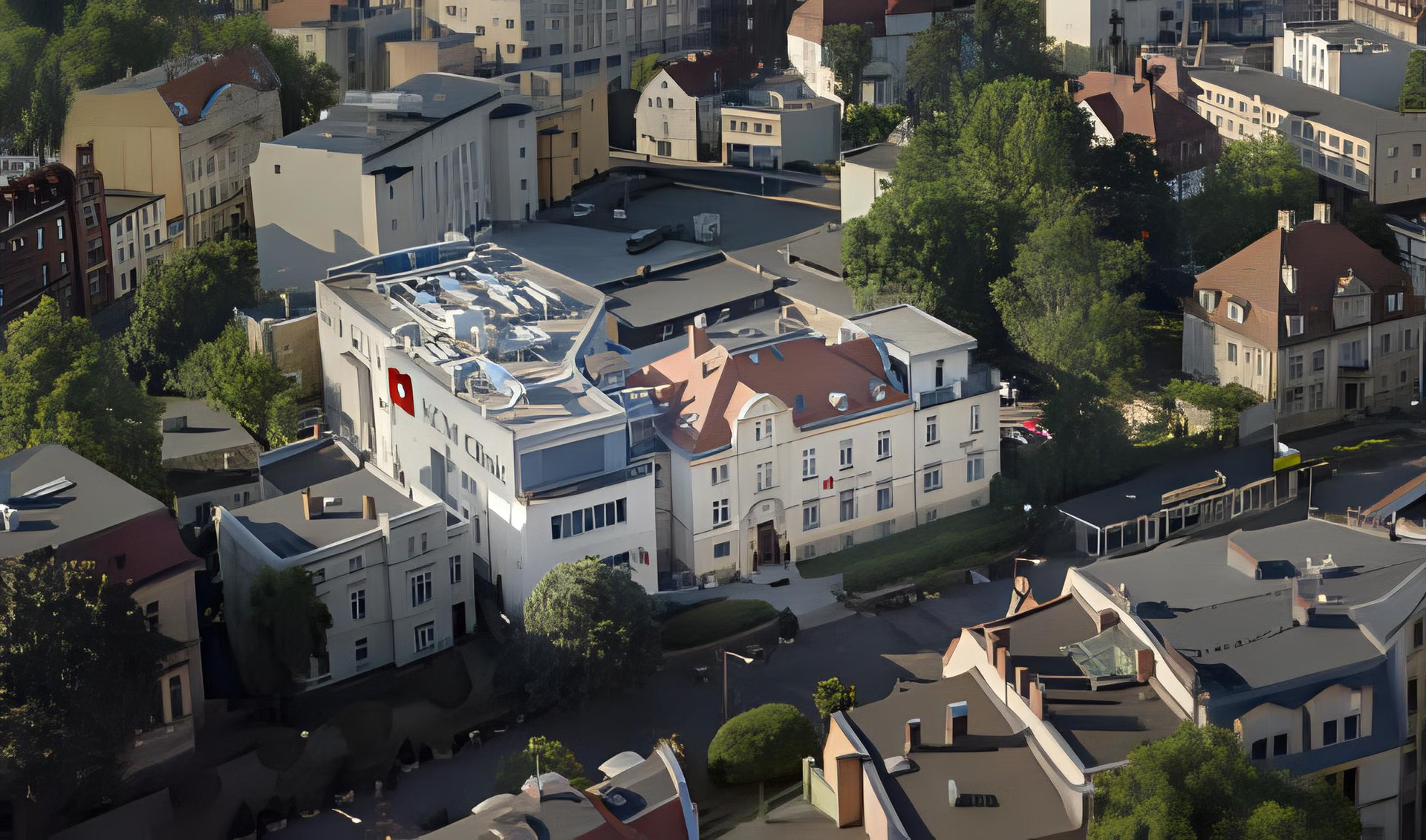
Explore the short list of selected Polish dental clinics: HALDent Clinic Zabierzów, Pro EndoDentica Clinic Lodz, and KCM Clinic Jelení Hora.
Cosmetic & Plastic Surgery
Cosmetic and plastic surgery is the second big magnet.[54] Foreign-facing clinics in Warsaw, Kraków, Wrocław, and Gdańsk report heavy demand for breast surgery, nose reshaping, liposuction, tummy tucks, and eyelid surgery.[24] This pattern matches global ISAPS data on popular procedures.[55]
The financial argument is obvious. Comparative guides aimed at British patients summarise the gap bluntly: most plastic surgery procedures in Poland cost 40–70% less than in the UK, depending on the clinic and technique, while still being delivered under EU rules and by board-certified surgeons.[51]
Many Polish centres have invested heavily in minimally invasive and body-contouring techniques, using high-definition liposculpture, modern anaesthesia protocols, and short-stay surgery models. For foreign patients, this means short hospital stays, quick recovery pathways, and often a “city break plus surgery” experience: three or four days in Warsaw or Kraków, then a few days in a nearby hotel for first check-ups before flying home.
Among the popular plastic surgery clinics in Poland are KCM Clinic Jelení Hora and Herhel Clinic Warszawa.
Fertility Treatment (IVF)
Infertility is one of the most dynamic fields in Polish medicine right now. Registry data from the Polish Society of Reproductive Medicine show that, even as early as 2012, over 17,000 assisted reproductive cycles were reported in a single year, with clinical pregnancy rates of around 33.7% per cycle for fresh IVF/ICSI.[56]
At the same time, in the 2013–2016 period, clinical pregnancy rates per embryo transfer for IVF and ICSI hovered around 29–30% overall, rising to about 32–33% in women under 35, broadly in line with European averages reported by ESHRE.[57][58]
Infertility treatment in Poland for foreigners combines high success rates, experienced embryology labs, and comparatively low prices. New public funding has also pushed clinics to standardise protocols, improve reporting, and expand capacity. At the same time, Poland remains more restrictive than some Western countries on issues like access for single women or same-sex couples, and donation anonymity, so these legal details still shape who can benefit from its IVF boom.[59]
Bariatric Surgery
Bariatric & metabolic surgery is one of Poland’s fastest-growing specialties and a good example of how quickly the country can scale modern techniques. A recent national analysis shows that the number of bariatric procedures rose from 1,499 in 2014 to 1,958 in 2016, and then exploded to 9,102 procedures in 2023.[60] That is an increase of about 507% over 9 years, far outpacing global trends in weight-loss surgery and confirming how mature treatment in Poland has become in this field.
The same study reports that over 96% of procedures are performed laparoscopically, reflecting the rapid adoption of minimally invasive techniques.[61] Laparoscopic sleeve gastrectomy is now the most common operation, followed by various gastric bypass procedures, with newer methods like one-anastomosis gastric bypass (OAGB) and other hybrid techniques gradually gaining share.
Considering weight-loss in Poland for foreigners, this surge means Polish bariatric units have high case volumes and well-rehearsed teams, precisely what you want for complex operations. Combined with prices typically 40–60% lower than in the UK or Scandinavia for sleeve or bypass surgery, Poland has turned into a serious alternative for people who have been stuck on waiting lists at home or priced out of private options altogether.
High-Tech & Complex Medicine
Poland’s real strength is that, behind the “new smile, new body” offer, lies a solemn high-tech medical scene. If you look at the numbers featuring toward treatment in Poland, three areas stand out: cardiology, orthopaedics, and ophthalmology. These are not side services – they are high-volume, technology-intensive fields that serve millions of Polish patients and, increasingly, foreign patients as well.
Cardiology & Cardio-Surgery
For heart patients, Poland has quietly built one of the densest cardiology networks in Europe. A 2024 national report counts 240 cardiology departments across the country, and about 69% offer 24/7 interventional cardiology.[62][63][64]
The interventional side is imposing. In 2023, Poland had 158 interventional cardiology centres employing 620 PCI operators. That year, they performed 157,430 coronary angiographies and 91,381 percutaneous coronary interventions (PCIs), with 453 primary PCIs per million for acute heart attacks. Modern drug-eluting stents are used in virtually all cases; one recent analysis reports stenting in 99.9% of PCI procedures, which is as high-tech as it gets anywhere in Europe.[65]
Structural heart work is catching up just as fast. In transcatheter aortic valve implantation (TAVI), an annual report showed a 41% jump in procedures from 2021 to 2022, reaching 77 TAVI per million inhabitants – a level that finally starts to resemble Western European practice instead of lagging behind it.[65][66] A dedicated national network of 25 TAVI centres with multidisciplinary heart teams has been established to manage these complex cases in accordance with European Society of Cardiology guidelines.
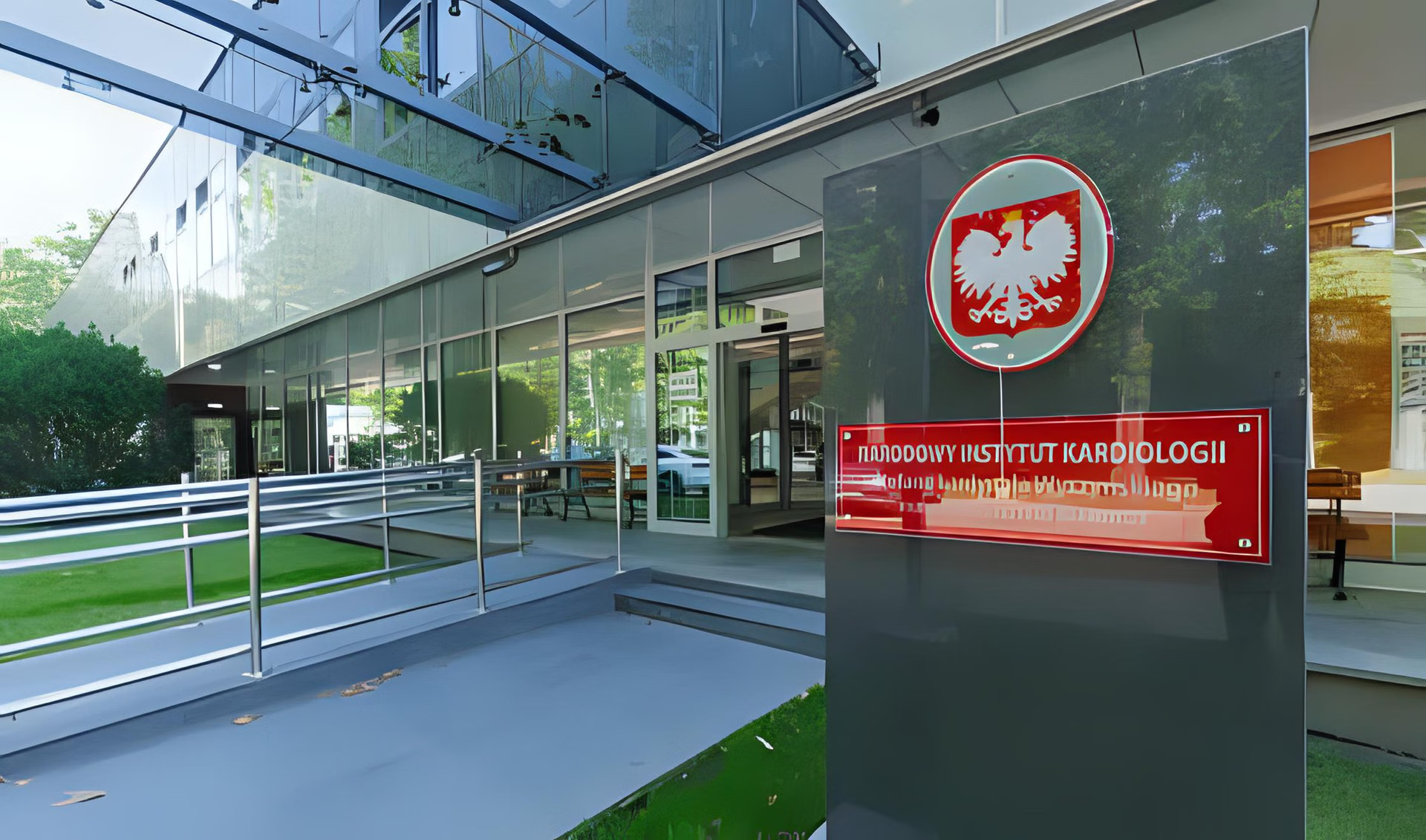
Among the leading cardiology and heart surgery hospitals are: the Institute of Cardiology Warsaw, Medicover Hospital Warsaw, and Cardiology Center Ostrowiec Swietokrzyski.
Heart healthcare in Poland for foreigners has become something simple. If you come with coronary disease or a valve problem, you’re not asking a small private clinic to improvise. You are tapping into a national ecosystem that performs tens of thousands of stent procedures and an increasing number of structural interventions each year.
Orthopedic Treatment In Poland
Orthopaedics is the other obvious heavyweight. Before the pandemic disruption, Poland had become one of the fastest-growing countries in the OECD for hip and knee replacements; between 2005 and 2019, utilisation of hip arthroplasty rose by more than 70%, and knee replacements more than doubled, according to trend data, which already made joint surgery a flagship area of treatment in Poland.[67]
A detailed Polish analysis of National Health Fund data for 2017 recorded 83,525 hip and knee arthroplasties in a single year.[68] Of those, 78,388 procedures (93.8%) were primary operations, and two-thirds were hip replacements – clear proof that joint surgery is no niche service here.
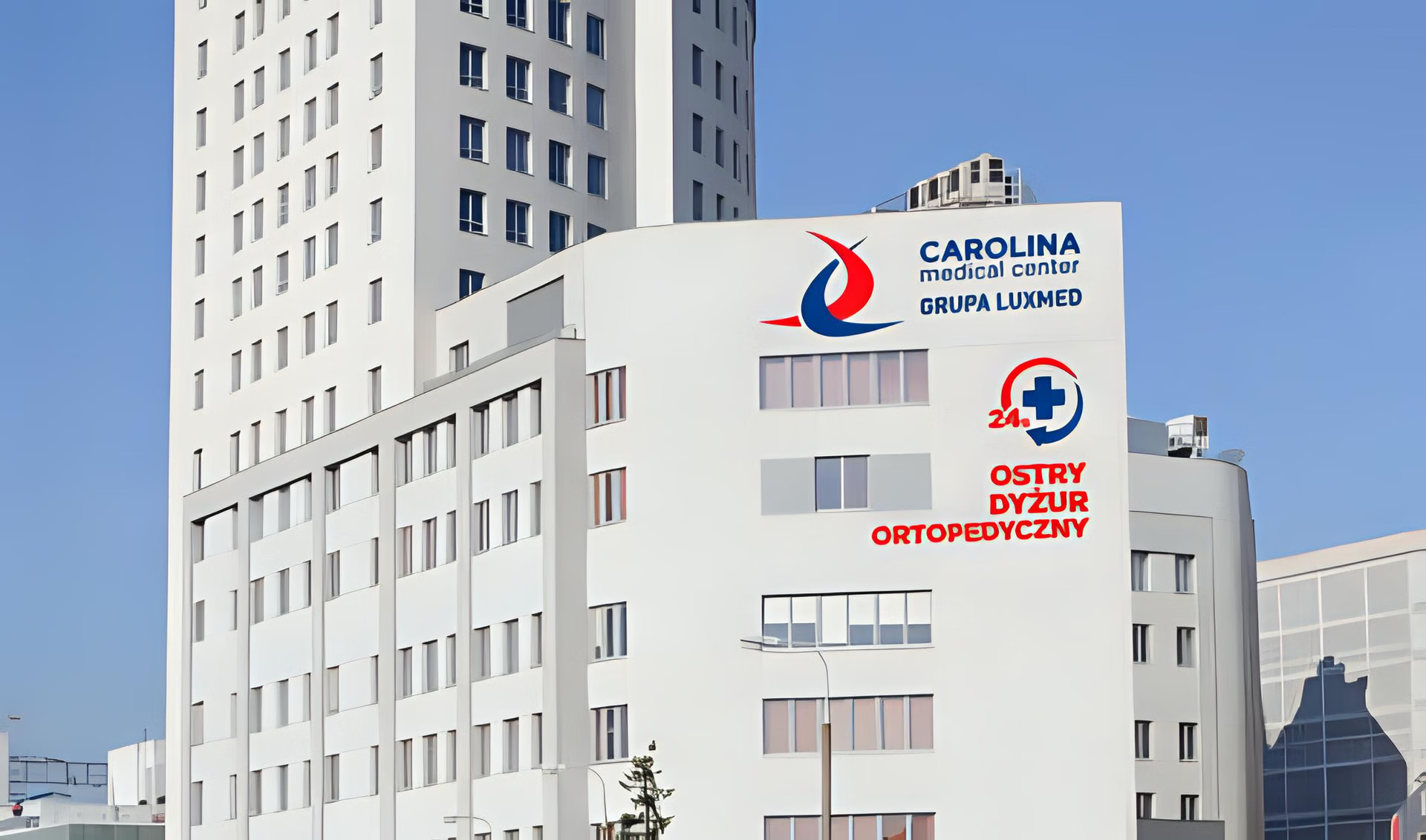
There is a powerful private orthopaedic scene that caters directly to foreign patients. Clinics like Carolina Medical Center in Warsaw and Gdańsk are good examples: one of the largest orthopaedic hospitals in Europe, specialising in joint replacement, spine surgery, and sports medicine; a FIFA Medical Center of Excellence; and a medical partner of the Polish Olympic Committee.[69] Their surgeons have introduced techniques such as custom hip prostheses, advanced ankle and knee prosthetics, 3D-planned corrections, and complex sports-injury reconstructions, and they run full in-house rehabilitation and functional diagnostics labs.
Multiple international comparison guides now list Poland among Europe’s key destinations for hip and knee replacement, spine surgery, and sports-injury repair, highlighting Gdańsk and Warsaw as particular spine & joint surgery hubs.
Ophthalmology (Eye Care)
Eye care is another area where the statistics tell a clear story. Cataract surgery, which is the global workhorse of ophthalmology, has become the single most common surgical procedure in Poland. A 2025 analysis of training data indicates that more than 320,000 cataract surgeries were performed in 2023, making cataract removal the most frequently performed operation in the country.[70]
For international medical travelers, ophthalmology treatment in Poland is firmly on the list of the country’s strengths. Destination overviews aimed at foreigners repeatedly mention ophthalmology – especially LASIK, lens exchange, and cataract surgery as a core reason to travel. Private eye centres, including units within large groups like Lux Med, advertise advanced refractive surgery, premium intraocular lenses and retinal care, with English-speaking staff and package pricing.
In practice, that means that if you come to Poland for your eyes – whether it’s laser vision correction, lens replacement, or cataract surgery you are entering a system where hundreds of thousands of such procedures are performed every year. Doctors here use the same phaco machines, femtosecond lasers, and modern lenses you’d find in any European clinic, but at Central European prices and usually with much shorter waits.
Diagnosis in Poland
When people talk about Polish healthcare, they often focus on surgery and treatment, but one of the most significant changes in the last few years has happened before anything gets that far. Diagnosis and prevention are quietly catching up with the rest of Europe, and that’s good news if you’re thinking about coming to Poland for a proper health check, not just for a single operation.
On the “hard infrastructure” side, Poland is solid. The latest statistics brief states that there are approximately 38 high-tech scanners (CT, MRI, and PET combined) per million people.[4] If you zoom in, you can see how fast imaging has grown. CT scanner density has risen to about 20 scanners per million people, almost double the level in Poland a decade ago.[71]
Check-up Packages
A health check-up in Poland can be really interesting for someone who wants a full work-up: blood, heart, lungs, abdomen, hormones – the whole story in one short trip.
Over the last decade, private providers have turned the classic scattered test list into structured check-up packages. Instead of booking a GP, then a lab, then a cardiologist, you buy a one-day or two-day programme and let the clinic choreograph your diagnostics.
Big private names like Medicover, Damian Medical Center, and LUX MED all push this model:
- Medicover’s Total Health Screening is marketed as a “detailed evaluation of your health in only 8 hours,” bundling a physical exam, imaging, and lab tests into a single continuous visit.[24]
- Damian Hospital in Warsaw offers a Comprehensive Medical Check-Up that takes about 12 hours in the hospital – you arrive in the morning, and by evening you have seen doctors, had imaging and blood work, and sat down for a summary.[73]
- LUX MED’s “Comprehensive Package” subscription gives access to 707 different laboratory tests and diagnostic examinations, plus dozens of specialist consultations, showing how deep these packages can go when you look under the hood.[72]
For international patients, there’s a whole extra layer explicitly built around travel. Healthcare screening for foreigners in Poland is “significantly cheaper than similar services in the western world,” with all exams conducted at a single modern clinic. Another Warsaw clinic explains its “check-up” concept clearly: all exams are carried out within one to two days, no admission, with predefined programmes so you don’t have to assemble the list yourself.
If you’re the kind of person who wants “one trip, full picture,” Poland’s check-up ecosystem is built almost exactly for you.
Treatment Cost in Poland
When you come to Poland as an international patient, you are dealing with private prices. The good news is that those packages are usually much easier on the wallet than in Western Europe.
What Does the Price Depend On?
In Poland, there is no national tariff book for international patients. Every private clinic builds its own prices – and that’s actually good news, because it gives room for package deals and real competition. But it also means your final number is always a mix of several moving parts.
Medical Service Specs
The first and most significant factor is what exactly needs to be done. A standard primary hip replacement, a straightforward gastric sleeve, or a “textbook” IVF cycle will sit at the lower end of the Polish price spectrum. A revision hip with bone loss, a super-obese patient needing extra theatre time, or an IVF cycle with donor eggs, PGT testing, and freezing will push the price up. Polish clinics review your reports, previous operations, and medications closely before they send a quote. Because all of that adds up to time, risk, and consumables, and ultimately determines how much your treatment in Poland will cost.
Clinic & Doctor
The second factor is where and by whom you are treated. A flagship hospital in Warsaw or Kraków, with international accreditations, hotel-style rooms, and a famous chief surgeon, will cost more than a smaller but perfectly competent centre in a secondary city. Within one clinic, the senior consultant with thousands of cases under their belt may charge a different fee than a younger specialist on the same team. From your point of view, you’re paying for experience and for the comfort level of the place where you recover.
Inclusions & Extra Bills
Then comes how long you stay and what’s included. Healthcare in Poland for foreigners uses flat “packages”: a fixed price for pre-op tests, operation, anaesthesia, a set number of nights, routine drugs and dressings, and first follow-up, sometimes with airport transfers and a hotel stay included.[74]
If everything goes as planned and you go home on day three instead of day five, the package usually stays as quoted – you’re paying for the slot, not for every individual bandage. If you need extra nights, an unplanned ICU stay, or another procedure, the clinic will either re-quote or add a clearly itemised supplement.
Additional Details
There is also the question of extras. A standard twin room, standard implant or lens, and basic meals are typically included in the base price. The bill starts to climb when you choose:
- Single or deluxe room;
- Premium or “lifetime” implants and lenses;
- An accompanying person, bed and full board;
- Extended physiotherapy blocks, spa-style recovery, or additional check-ups.
These are not tricks – they’re real costs that clinics pass on. The important thing is that in Poland, they are usually spelled out in advance: you see a line for the operation, a line for any premium implant, a line for an extra rehab week, and you decide what you want.
Cost Table
All prices below are indicative ranges for international, self-pay patients in Polish clinics. They are meant as a realistic ballpark, not an exact quote; your final offer for treatment in Poland will depend on your medical reports, co-existing illnesses, and the clinic you choose.
| Treatment | Typical range | Includes | Notes & Insights |
|---|---|---|---|
| Full medical check-up (1–2 days) | 1,500 € - 3,000 € | Broad lab panel, ECG, imaging (e.g., ultrasound, X-ray), several specialist consults, final summary | Varies with the scope of tests and the number of specialists |
| Single dental implant (incl. crown) | 600 € – 1,500 € | Implant, abutment, crown, local anaesthesia, basic imaging | Varies with implant brand and need for bone grafting |
| All-on-4 implants (one jaw) | 5,000 € – 8,000 € | 4 implants, fixed bridge, surgery, temporary teeth, lab work | Depends on the prosthesis material and the complexity of the case |
| Hip replacement | From 6,000 € | Prosthesis, surgery, hospital stay, routine physio, basic meds | Depends on implant type and length of stay |
| Knee replacement | From 5,500 € | Prosthesis, surgery, ward stay, initial rehabilitation | Varies with implant system and rehab intensity |
| Lumbar spine surgery | 11,000 € – 15,000 € | Pre-op tests, surgery, implants (if fusion), several ward nights | Depends on the number of levels and implant hardware |
| Gastric sleeve | From 5,000 € | Pre-op work-up, laparoscopic sleeve, 2–4 nights in hospital, dietitian visit | Varies with BMI, comorbidities, and package extras |
| Gastric bypass | From 5,800 € | Pre-op work-up, laparoscopic bypass, post-op monitoring, diet plan | Higher for complex revision or super-obese cases |
| IVF cycle (own eggs) | 2,800 € – 5,000 € | Stimulation monitoring, egg retrieval, IVF/ICSI, embryo transfer (usually day 3–5) | Medication cost and add-ons (ICSI, PGT) change the total |
| IVF with donor eggs | 6,000 € – 10,000 € | Donor matching, stimulation, retrieval, fertilisation, transfer | Varies with donor type, number of embryos, and guarantees |
| Laser eye surgery (LASIK / Femto, both eyes) | From 2,900 € | Qualification exam, laser correction of both eyes, and early follow-up | Depends on the laser platform and the technique chosen |
| Cataract surgery | From 2,200 € | Phacoemulsification, lens implant, day-care, or short stay | Higher for premium multifocal/toric lenses and extras |
| Coronary artery bypass graft (CABG) | From 18,750 € | Surgery, ICU stay, ward stay, routine imaging, and labs | Varies with the number of grafts and ICU duration |
| Rhinoplasty | 3,000 € – 5,000 € | Pre-op consult, surgery, 1 night in clinic, early follow-up | Depends on open vs closed technique and revision status |
| Breast augmentation | 3,800 € – 7,000 € | Implants, surgery, anaesthesia, 1–2 nights in clinic | Implant brand/size and combo procedures affect price |
| Tummy tuck | 4,500 € – 8,500 € | Surgery, compression garments, 1–3 nights in clinic, basic meds | Strongly linked to the extent and BMI |
Can the Cost of Treatment Change?
Generally speaking, yes, the price can change – but not randomly. In most Polish clinics, it usually happens in a few predictable situations:
- Health Picture Changes. Once the team sees you on site (for example, new lab findings or imaging force a different, more complex procedure).
- Intraoperative surprises. Such as much more damaged tissue than expected, requiring extra implants or longer theatre time.
- More Complicated Recovery. You need extra days on the ward, additional imaging, or an ICU night that wasn’t planned.
In all those cases, reputable clinics don’t just do the work and send a surprise invoice afterwards. They pause, explain what has changed and what it means for the budget, and ask for your agreement before they go beyond the original plan.
When you book treatment in Poland through Airomedical, the process becomes even clearer. The platform and our in-built team collect detailed offers from clinics, check what’s included in each package, translate the medical and financial details into plain language, and make sure you know exactly what's included and what's not. And if something in your clinical situation changes in a way that affects cost, you get an updated written estimate and a choice, not a surprise bill at the end of your stay.
Navigating cost on Airomedical
You can easily check treatment costs in Poland on Airomedical in two simple ways. To explore available packages, visit the offers page, where you’ll find ready-made options with clear prices, clinic locations, and a detailed breakdown of what’s included in each program.
If you already have a clinic in mind, open its profile and scroll to the prices section. Some hospitals list the exact costs of procedures, such as surgery, diagnostics, or rehabilitation. When prices aren't shown, you can still send a brief request to get a personalized quote.
Medical Tourism Specs
Nowadays, Poland is considered “one of the most popular health tourism destinations” in Europe and is highlighted for its long tradition of health resorts, a strong private sector, and high-level specialists, which are the pillars of that position.[77] Academic work backs this up: an industry analysis of medical tourism in Poland notes that the country ranked 24th worldwide and 5th among European countries in the Medical Tourism Index 2017, which measures destination environment, healthcare quality, and tourism attractiveness.[75][76]
In practice, that status is built clinic by clinic. A government brochure highlighting medical treatment in Poland, for example, describes KCM Clinic as a modern multi-specialty hospital that already treats around 700 international patients a year, mainly from the Gulf region, the UK, Ireland, and Germany, in bariatrics, plastic surgery, orthopaedics, and minimally invasive spine surgery.[24]
How can Airomedical help?
For treatment in Poland, Airomedical serves as your guide through the private system and keeps everything clear and structured from the first inquiry to your trip home. Instead of writing to several Polish clinics on your own, you can use one platform to browse hospitals in various cities, compare medical specialists, and see concrete offers for the procedures you’re interested in.
Each Polish clinic profile includes verified details about the hospital, its main specialties, doctors, certifications, and numerous patient feedback. The platform features mean you are not choosing unthinkingly from a list of names and logos, but rather seeing who actually does your type of operation, how often, and under what conditions. It becomes much easier to decide whether a compact, high-volume clinic in southern Poland or a large private hospital in Warsaw better fits your expectations and budget.
Polish Clinic Rankings
The Airomedical platform has a separate section called rankings. This part helps explore the best facilities across different regions, including Poland. We apply a multifactor scoring system, such as AiroScore and UserScore, but go beyond reviewing treatment outcomes, volumes of complex procedures, accreditations, equipment, quality scores, and numerous statistical parameters. Such a system allows us to verify that the clinic not only looks good on paper, but truly delivers high-quality, evidence-based care and comfortable conditions for foreign patients.
Specifically for patients traveling to Poland, Airomedical highlights the top 10 hospitals in Poland in its ranking, “Best General Hospitals In Poland”. This listing accumulates the general facilities but does not rank in any particular specialization.
Popular Destinations in Poland
Choosing where to have a treatment in Poland matters just as much as selecting the proper care. Private clinics that work with international patients are not scattered randomly. The medical centres cluster in a few big cities that combine good hospitals, easy flights, and comfortable places to stay. Recent overviews of the Polish market point to the same map again and again: Warsaw, Kraków, Wrocław, and Gdańsk are the main hubs for medical travellers.
For foreigners, these destinations mean three things: you can fly in easily, you have a choice of serious private hospitals and specialist centres, and there is enough “normal” tourism around you that your companion doesn’t feel trapped in a hospital corridor.
Warsaw Region
Warsaw is the natural starting point for many international patients. It is Poland’s largest city and capital, with two international airports and dense rail links, so that you can get there directly from most major European hubs.[79] Healthcare guides in Poland for tourists repeatedly mention Warsaw as one of the primary cities for private treatment, especially in fields such as orthopaedics, sports medicine, IVF, bariatric surgery, and advanced diagnostics.
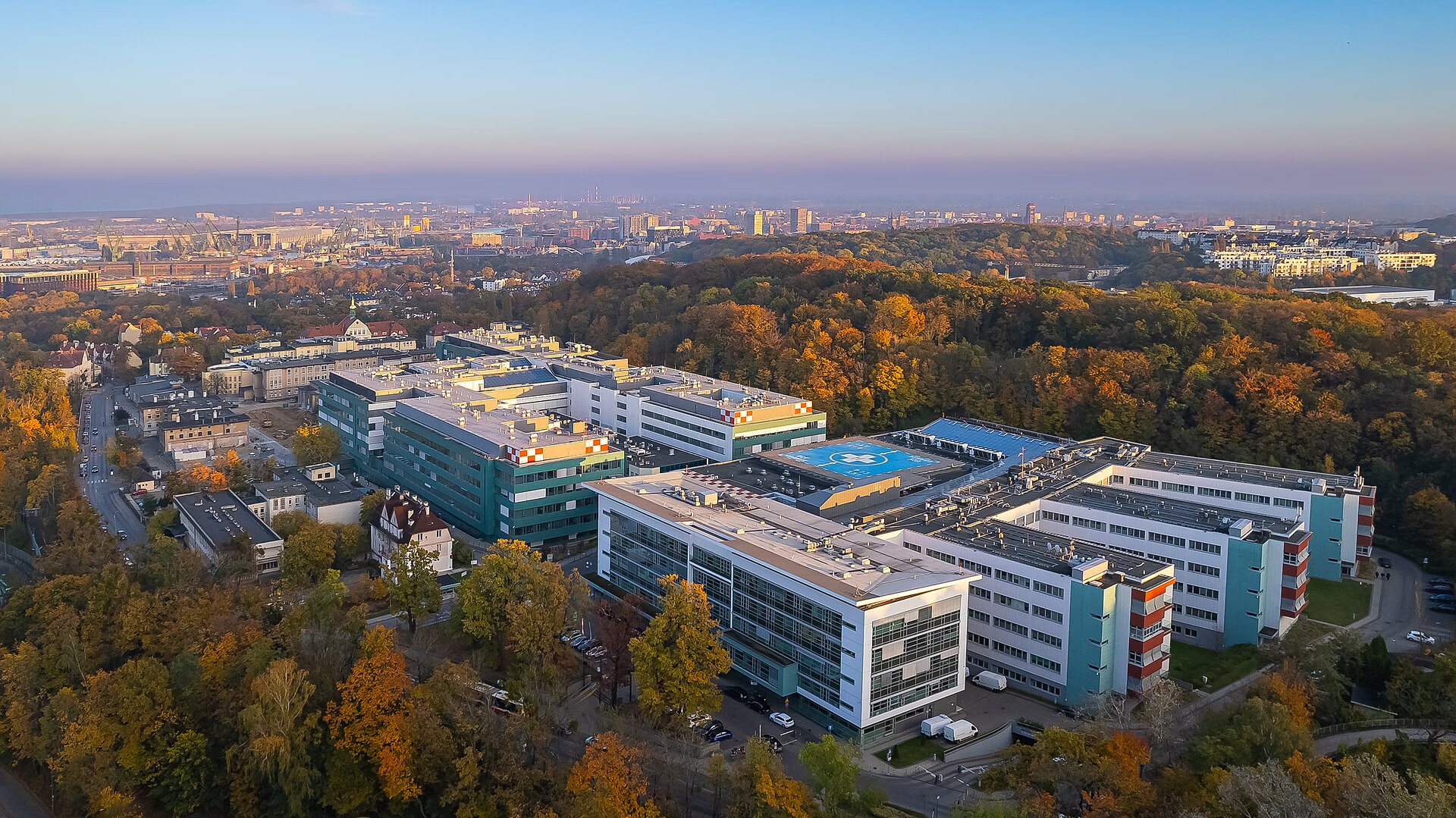
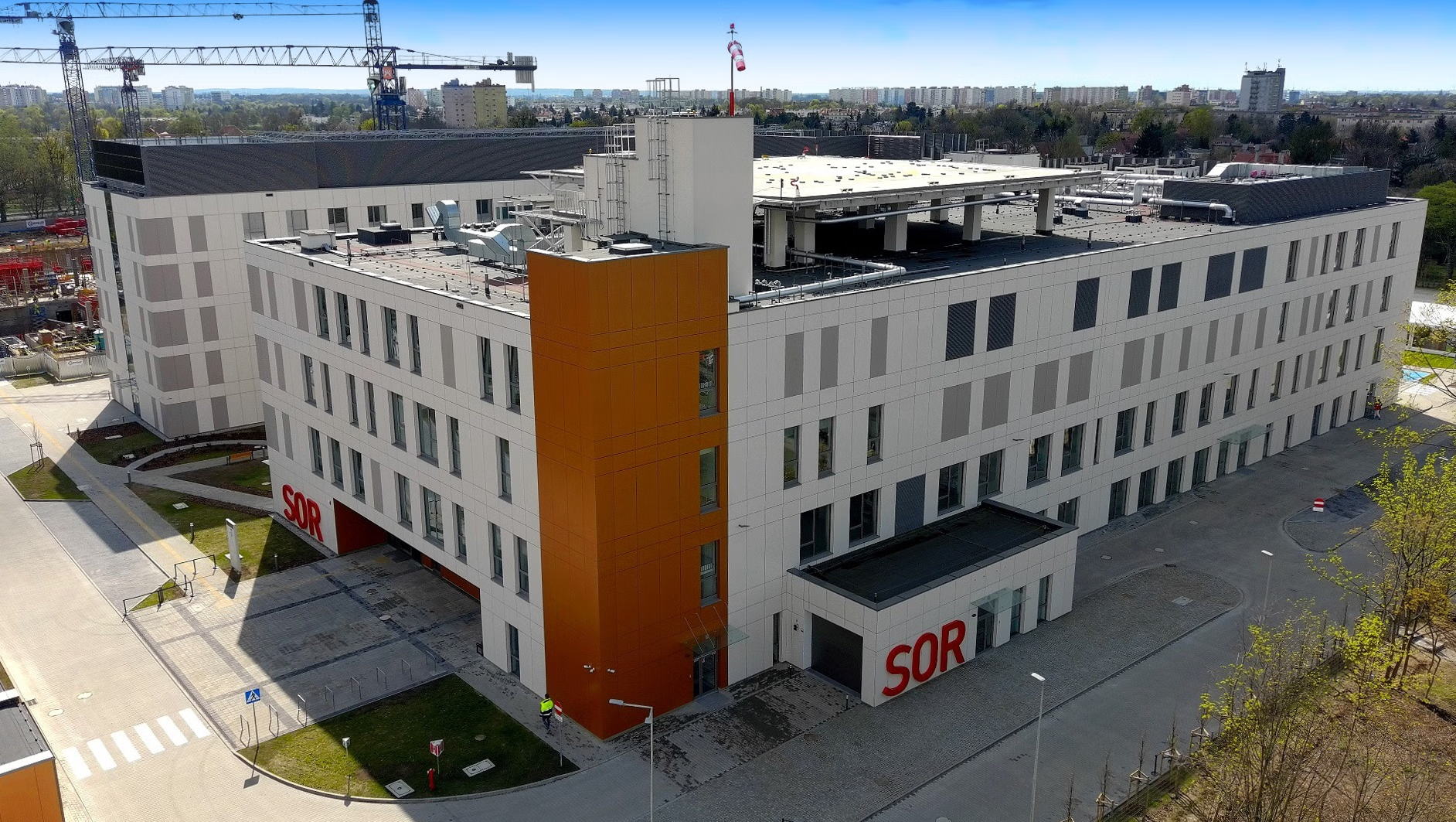
From a healthcare perspective, the Mazowieckie region around Warsaw has the largest concentration of hospitals in the national network, alongside Silesia, making it one of the best-supplied areas in the country.[80] On top of that, a public base sits a dense layer of private hospitals and clinics. Independent reviews highlight facilities such as Carolina Medical Center and Medicover Hospital as leading private institutions for foreign patients, with FIFA-recognised sports medicine, complex orthopaedic surgery, and multi-specialty care under one roof.[78]
Kraków & Lesser Poland
Kraków combines two roles that are very attractive for people coming from abroad: it is both a historic tourist city and a serious medical centre.[81] The University Hospital in Kraków is a major academic institution with over 30 departments and specialised centres, including a neurology and ALS unit that serves an estimated 15 million people across southern Poland.[82][83]
Around this public backbone, a strong private sector has grown. Kraków is often listed among the country’s leading medical travel destinations. City information for visitors also highlights a well-developed medical infrastructure, from outpatient clinics to emergency care, which is reassuring if you are planning a combined tourist and treatment trip.
Kraków works exceptionally well for people who want to blend a procedure with a short stay in a classic European city. Many private hospitals sit within easy reach of the old town, and recovery can mean gentle walks along the Vistula River or a couple of quiet days in the nearby hills once your doctor gives the green light.
Wrocław with the Silesian Belt
Moving west and south, Wrocław and the wider Silesian region form another strong corridor for medical travellers. Analyses of the hospital network show that Śląskie (Silesian) and Mazowieckie have the highest number of hospital units in the country, underscoring the density of the healthcare infrastructure in this industrial-urban belt.[80]
In the heart of this region, the Upper Silesian Medical Centre in Katowice stands out as one of the largest multidisciplinary hospitals in southern Poland. It employs more than 2,500 staff, including 587 doctors and 926 nurses, and runs 22 inpatient departments covering 18 medical specialties, from cardiology and cardiac surgery to neurology and oncology.[84] This kind of capacity provides a strong foundation for complex procedures and robust backup, even if you choose to have the primary treatment in a smaller private unit.
Wrocław itself is one of Poland’s leading hubs for private treatment, often mentioned alongside Warsaw and Gdańsk. The city offers modern university hospitals, an emerging cluster of private clinics, and easy flight connections with Western Europe. Foreign patients commonly come here for orthopaedics, spine surgery, and bariatrics, using Wrocław as a quieter alternative to the capital but with similar technical standards.
Gdańsk & the Baltic Coast
For patients who like the idea of sea air as part of their recovery, the Tri-City area of Gdańsk, Gdynia, and Sopot is beautiful. Gdańsk is among the top Polish destinations for cosmetic, dental, and eye surgery, and highlights the region’s mix of modern clinics and seaside atmosphere.[85]
The Baltic coast is also one of Poland’s traditional health zones. Official tourism material notes that Poland has 45 Ministry of Health-accredited health resorts, several of which are clustered along the coast. Towns like Kołobrzeg and Świnoujście specialise in spa-based treatment of musculoskeletal, thyroid, neurological, rheumatic, and respiratory diseases, using mineral waters, peat mud, and an iodine-rich maritime climate as key therapeutic factors.
Sopot combines both worlds: it is one of the best-known Polish spa resorts and also a lively seaside town. Historical sources describe more than two centuries of spa tradition in Sopot, with rheumatology and respiratory hospitals using brine baths and inhalations. At the same time, modern facilities add hotel-standard rooms and wellness infrastructure on top. For an international patient, that means you can have day-case procedures or rehabilitation sessions, then recover with gentle walks along the beach rather than on a busy city street.
Organization of a Trip to Poland Step-by-Step
Organising a medical journey to Poland works best when you treat it like a small project: precise diagnosis, exact plan, and clear dates. Poland is already recognised in European research as one of the main medical-tourism destinations in Central and Eastern Europe, with a growing private sector that has learned to bundle hospital choice, scheduling, travel, and aftercare into one coherent offer for foreign patients.
Below is how the process usually looks when you come to Poland specifically for treatment.
Preliminary Consultation as First Step
Your Polish medical trip generally starts at home, not at the airport. The first step is to collect your medical documents: recent reports, imaging, lab results, discharge summaries, and a short medical history.[86] Most private clinics and platforms will ask for scans in electronic form and reports in English (rarely in Polish).
Once your documents are ready, you usually submit them through Airomedical. Many Polish hospitals now offer online or written consultations for foreign patients, in which a specialist reviews your case remotely and provides a preliminary opinion and treatment proposal. At this stage, you clarify what is realistically possible in Poland, what the likely procedure or check-up will look like, and how long you would need to stay.
Choosing the Clinic & Doctor
The next step is choosing where exactly you want to be treated in Poland. Through Airomedical, you can compare Polish providers by speciality, location, certifications, doctors, and typical package prices, which is easier than emailing half the country on your own. Academic work and market reports both underline that Poland’s medical tourism is concentrated in a limited number of regions and clinics, so picking the right centre has more impact on your experience than the city name alone.[87]
Once you have a shortlist, confirm with the clinic what is included in their offer: pre-op tests, the primary procedure, number of nights in hospital, standard medications, follow-up visit, and any extras such as transfers or hotel nights. Polish private providers typically issue a written cost estimate and ask you to sign a treatment agreement; your slot is then secured with a deposit or full prepayment, depending on the value of the package and how far in advance the date is.
Scheduling
Poland’s public system is known for long queues; recent benchmarks report average waits of around 4 months for many guaranteed services and even longer for specialties such as endocrinology or ophthalmology.[15] Private clinics exist partly in response to that, and surveys show that the main advantage patients see in private care is shorter wait times for appointments.[88]
For foreign self-pay patients, diagnostics in private centres are often scheduled within days or a couple of weeks, while elective surgeries are commonly booked within two to six weeks, depending on how specialised the procedure is and how flexible you are on dates. High-demand fields such as bariatric surgery, complex orthopaedics, or IVF can be busy, so it is wise to start the process early, especially if you need a specific surgeon or want to travel in peak holiday months. Planning gives you a better chance to match surgery dates with cheaper flights and appropriate recovery time off work.
Payment Details
Polish private hospitals work with fixed package prices or detailed case-by-case estimates. Because you are coming from abroad, clinics almost always require payment in advance, either as full prepayment or as a substantial deposit, with the balance due before or shortly after admission. Bank transfer and card payments are the norm; large cash payments are not encouraged under Polish and EU banking regulations.[89]
Before you pay, you should receive a written pro forma invoice or contract that clearly describes what is covered by the price and how refunds or surcharges will be handled if your clinical situation changes. Private providers in Poland are used to working with international patients and will typically outline payment deadlines, currency, and conditions in clear, written form.
Visa for Medical Treatment in Poland
Whether you need a visa depends mainly on your passport. Citizens of the EU and many visa-exempt countries can enter Poland for short stays of up to 90 days without a visa, provided they meet the general entry conditions and hold appropriate medical or travel insurance.
If you do need a visa, the standard route is a Schengen visa for medical reasons (short stay) or a national type-D visa for longer treatment.[90][91] Official checklists and consular documents for Poland emphasise the exact core requirements.[92]
Because processing times and details vary by country, it is essential to check the website of the Polish embassy or visa centre where you will apply. Many Polish clinics are familiar with this process and can issue the medical confirmations and invitations you need once your treatment plan and prepayment are agreed.
Accommodation & Logistics
Once your date is fixed and your visa sorted (if needed), you can focus on where you will actually stay. Most foreign patients choose cities with good international connections, such as Warsaw or Gdańsk, and then book a hotel or serviced apartment close to the clinic. These cities are served by international airports and rail hubs, which reduces travel time and makes it easier to plan your arrival and discharge days.
Private Polish clinics that regularly work with international patients often offer assistance with logistics: some advertise airport pickup, hotel recommendations, or direct cooperation with nearby hotels, and occasionally provide clinic-hotel shuttles. It is worth asking your chosen hospital how far they go with this kind of support, so you know whether you will be organising taxis and apartments yourself or whether a coordinator will handle much of it for you.
Extra Services
Many foreign patients worry more about language, paperwork, and practical obstacles than about the operation itself.[93] In Poland, this is precisely the gap the private sector tries to fill. More and more clinics now offer comprehensive support packages that include assistance with travel and lodging, as well as native-language services.[24]
Some clinics also assign personal coordinators who escort you through registration, testing, admission, and discharge, and can help with mobility issues, accessible transport, or luggage storage during your stay.
Aftercare
Your trip technically ends when you fly home, but your treatment in Poland does not. Good follow-up is crucial for results, especially after surgery. European studies on cross-border health care stress that well-organised continuity between the foreign clinic and home-country providers reduces complications and the need for emergency care after patients return.[94][95]
Polish clinics usually provide a detailed discharge summary in Polish and, often, in English, including diagnosis codes, procedure descriptions, medication lists, and recommended follow-up tests. Many offer remote check-ups by video or email, especially in the first weeks after you leave.[96] If you are coming through Airomedical, the coordination team can help you share documents with your home doctor and arrange additional remote opinions if needed. The goal is that when you step off the plane back home, you not only feel better, but also have a clear plan, written instructions, and a contact point in Poland if questions arise later.
Climate & Geographical Location
Poland stretches from the Baltic Sea in the north to the Carpathian and Tatra Mountains in the south, so the setting for your treatment can feel very different depending on where you go.[97] This large state borders Germany, the Czech Republic, Ukraine, Slovakia, Belarus, and Lithuania, and has access to the Baltic Sea. It is a beautiful destination with a rich history.
Coastal cities like Gdańsk and Sopot have a milder, breezier feel. At the same time, Kraków or Wrocław are more typically Central European, and the mountain areas are cooler and crisper, especially at night.
- Climate Zones. Poland has four distinct seasons. Winters are cold, with frost and regular snow in many regions; spring is mild but changeable; summers are usually warm rather than extreme, and autumn is often dry and pleasant, with comfortable daytime temperatures. For most international patients, late spring and early autumn are the easiest times to travel: you avoid icy pavements and deep cold, but also the hottest days and peak tourist crowds.[98][99]
- Air & Allergies. If you have strong pollen allergies or asthma, it’s worth knowing that grass and tree pollen peak in late spring and early summer, and rapeseed fields can be challenging for sensitive eyes and airways inland. In that case, a Baltic coastal location with steady sea breezes, or a trip timed for early spring or September–October, will usually feel more comfortable.[100]
- Daylight. Longer summer days are ideal if you want to build in outdoor walks and rehab; in winter, the focus shifts naturally to indoor physiotherapy and hotel- or clinic-based recovery.[101]
Matching your Polish destination and season to your treatment plan can make the whole experience noticeably smoother.
FAQ
Is Poland suitable for medical treatment?
Yes. Poland has become one of Europe’s busiest destinations for planned treatment, with estimates of over 400,000 international patients a year coming for care. Clinics attract people with prices up to 60% lower than in Western Europe, while still offering modern equipment, EU-level regulation, and specialists trained in Poland and abroad.
What is healthcare like in Poland?
Poland has a mixed system: a large public sector financed by compulsory health insurance, plus a fast-growing private sector. Public facilities provide most emergency and inpatient care, while private clinics dominate in dentistry, elective surgery, diagnostics, and services for foreigners.
Does Poland have good healthcare?
Yes, but with contrasts. Poland offers modern hospitals, strong cardiology, orthopaedics, IVF, and eye care, and a high number of hospital beds per 1,000 people. At the same time, staffing shortages and long public waiting lists mean many people (including foreigners) prefer private clinics for faster access.
Is treatment for foreigners in Poland mostly public or private?
As an international patient, you will almost always be treated in private clinics and hospitals. Foreign guests use these centres, offer fixed-price packages, and often have international departments that coordinate documents, airport transfers, and follow-up. Public hospitals form the backbone of the system, but the typical medical tourist experience is firmly on the private side.
What are the most common treatments foreigners come to Poland for?
Poland is especially popular for dental implants, cosmetic and plastic surgery, and orthopaedic procedures such as joint replacement and sports-injury repair. Demand for fertility treatment, cardiology, ophthalmology, and bariatric surgery has also skyrocketed in recent years, with some reports noting that dental tourism alone accounts for almost 40% of international arrivals.
How safe are Polish clinics in terms of quality and regulation?
The National Centre oversees hospitals and clinics in Poland for Quality Assessment in Healthcare (CMJ), a Ministry of Health agency that runs a structured accreditation programme and publishes detailed hospital standards. Accredited facilities must demonstrate adherence to clear protocols for surgery, infection control, and patient safety, and many private hospitals add international certifications, such as ISO, on top of that. As an EU member state, Poland also operates under strict GDPR data-protection rules, so medical records and personal data are handled within a regulated legal framework.
Will doctors and staff speak English?
In private clinics that cater to foreigners, English is standard. Healthcare in Poland for expats is explicitly advertised by English-speaking staff and often offers consultations in several other languages, including German, Russian, Spanish, French, or Arabic. If you are not comfortable in English, it is still worth asking for an interpreter; many centres can arrange one as part of the package.
What happens if I need an emergency during my stay?
Poland uses the Europe-wide emergency number 112, which is free from any phone and connects you to ambulance, police, or fire services; the traditional number 999 for ambulance also still works. In a serious situation, you will be taken to the nearest appropriate hospital, and larger urban centres usually have staff who can communicate in English.
Which city in Poland is “best” for medical treatment?
There is no single winner. Warsaw has the broadest choice of private hospitals and international clinics; Kraków combines strong university medicine with a historic city centre; Wrocław and the Silesian region are major hubs for orthopaedics and surgery; while Gdańsk and the Baltic coast are popular for combining treatment with sea-air recovery.
Does Poland accept second opinions and remote case reviews?
Yes. Many private Polish clinics offer digital health features, including remote consultations via email or video call, and routinely review scans and reports before you travel. It helps the team determine whether Poland is a good option for you and what the likely treatment path will be.
How long will I wait for treatment as a private international patient?
Waiting times in the public system can be long, but for self-pay foreigners in private clinics, the timeline is much faster. Diagnostic packages are often scheduled within a few days to two weeks, and elective procedures such as dental implants, plastic surgery, or joint replacement are commonly booked within 2–6 weeks, depending on how complex your case is and how flexible you are on dates. Clinics that work with many international patients schedule their appointments to accommodate flight times and short stays.
Do I need a visa for medical treatment in Poland?
If you are from the Schengen area or many European countries, you can usually enter Poland visa-free or with your regular ID, but you should still carry travel insurance. Patients from non-EU countries often need a Schengen visa for medical reasons. The exact rules depend on your nationality, so checking the website of the Polish consulate or embassy is essential.
Can my medical visa for Poland be extended if treatment takes longer?
In some cases, yes. If your treatment plan changes and you need to stay longer, the clinic can usually provide updated medical letters and documentation that you can present to local authorities when applying for an extension or a change of status. The Polish Border and Migration Service always makes decisions, but having clear medical justification and proof of funds greatly increases your chances.
What about the cost of medical treatment in Poland?
Compared with Western Europe, Poland remains very competitive: many procedures are 40–70% cheaper than in the UK, Scandinavia, or Germany, even after you factor in flights and hotels. For a clearer picture, it is best to review the Cost Table section of this guide, then request an individual quote through Airomedical, where clinics specify what is included in the package price and what would be extra in your case.
Can I choose which doctor or hospital will treat me in Poland?
Yes. In the private sector, you are free to choose your hospital and usually even your surgeon or leading specialist. Platforms like Airomedical let you compare Polish clinics and doctors by experience, specialization, language skills, certifications, and patient feedback, so you can pick the team that fits your diagnosis and preferences rather than simply accepting the first offer.
How do I get from the airport to a hospital or clinic in Poland?
Major cities like Warsaw, Kraków, and Gdańsk are linked to their airports by city rail, buses, and taxis, and ride-hailing apps operate in most urban areas. Many clinics that work with foreign patients also offer pre-arranged transfers and will send a driver to meet you at arrivals and take you to your hotel or directly to the clinic.
Does Poland have universal healthcare?
Yes. Residents covered by the National Health Fund (NFZ) have universal access to a broad basket of publicly funded services, regardless of income or age. Coverage is tied mainly to employment, social insurance, or voluntary NFZ contributions.
Is healthcare free in Poland?
Not exactly “free,” but free at the point of use for insured people in the public system for most necessary services. Some items (certain drugs, dental work, private rooms, extra comfort services) require co-payments or full out-of-pocket payment.
Is healthcare free in Poland for foreigners?
Only in specific situations. EU/EEA and Swiss citizens with a valid EHIC (or S1) can access medically necessary public care on the same terms as Polish insured patients. Other foreigners usually pay privately or use insurance unless they have NFZ coverage through work, residence, or a bilateral agreement.
Do I need to have a referral in Poland?
In the public referral system, you usually need a referral from a family doctor (GP) to see most specialists or access many hospital services. In the private sector, which is what most internationals use, referrals are rarely required. Patients can usually book directly with a specialist or clinic.
References
- Polish Investment and Trade Agency (PAIH), Strategy and Business Promotion Department. (2022, September). The health-related services & medical tourism sector. Polish Investment and Trade Agency (PAIH). Retrieved November 2025.
- Senyuta, I., Harasymiv, O., Buletsa, S., Fursa, S., & Fursa, Y. (2020, April 1–2). Medical tourism in Ukraine and abroad: Comparative analysis. In Education Excellence and Innovation Management: A 2025 Vision to Sustain Economic Development during Global Challenges (35th International Business Information Management Association Conference (IBIMA), Seville, Spain, pp. 14307–14315). Retrieved November 2025.
- National Health Fund (NFZ), National Contact Point for Cross-border Healthcare. (2025, September 26). Treatment in Poland under the cross-border directive. National Health Fund (NFZ). Retrieved November 2025.
- Organisation for Economic Co-operation and Development (OECD). (2025, November 13). Health at a Glance 2025: Poland. Organisation for Economic Co-operation and Development (OECD). Retrieved November 2025.
- Organisation for Economic Co-operation and Development (OECD). (2023, November 7). Hospital beds and occupancy: Health at a Glance 2023. Organisation for Economic Co-operation and Development (OECD). Retrieved November 2025.
- Statistics Poland. (2025, July 30). Health care expenditure in 2022–2024. Statistics Poland. Retrieved October 2025.
- Organisation for Economic Co-operation and Development (OECD). (2025, November 13). Health at a Glance 2025: Poland. Organisation for Economic Co-operation and Development (OECD). Retrieved November 2025.
- Sowada, C., Richardson, E., & Kowalska-Bobko, I. (2024, December 6). Poland: health system summary 2024. European Observatory on Health Systems and Policies. Retrieved November 2025.
- Organisation for Economic Co-operation and Development (OECD) & European Observatory on Health Systems and Policies. (2023, December 15). Poland: Country Health Profile 2023. State of Health in the EU. Retrieved November 2025.
- Wikipedia contributors. Health care in Poland. Wikipedia, The Free Encyclopedia. Retrieved October 2025.
- Sagan, A., Panteli, D., Borkowski, W., Dmowski, M., Domański, F., Czyżewski, M., et al. (2011, December 7). Poland: health system review. Health Systems in Transition, 13(8). European Observatory on Health Systems and Policies / World Health Organization (WHO) Regional Office for Europe. Retrieved November 2025.
- Topór-Mądry, R., Balwicki, Ł., Kowalska-Bobko, I., & Włodarczyk, C. W. (2018). Poland – Organization and financing of public health services in Europe. In B. Rechel, A. Maresso, A. Sagan, et al. (Eds.), Organization and financing of public health services in Europe: Country reports (Health Policy Series, No. 49). European Observatory on Health Systems and Policies. Retrieved November 2025.
- Social Insurance Institution (ZUS). (2024, May 9). Social security in Poland. Social Insurance Institution (ZUS). Retrieved November 2025.
- World Health Organization (WHO). WHO IRIS document – bitstream de5d3b5e-7bdb-4a24-9af0-7de7f00100ee. World Health Organization (WHO). Retrieved October 2025.
- World Health Organization (WHO). WHO IRIS document – bitstream 2083012f-8f96-4145-933a-9f9b7808a273. World Health Organization (WHO). Retrieved October 2025.
- Sowada, C., Sagan, A., Kowalska-Bobko, I., Badora-Musiał, K., Bochenek, T., Domagała, A., et al. (2021, September). Poland: Country Health Profile 2021. State of Health in the EU. OECD Publishing / European Observatory on Health Systems and Policies. Retrieved November 2025.
- Statistics Poland. (2023, July 27). Healthcare expenditure in 2020–2022. Statistics Poland. Retrieved November 2025.
- Organisation for Economic Co-operation and Development (OECD). Health spending and financial sustainability. OECD. Retrieved November 2025.
- Statistics Poland. (2025, July 30). Health care expenditure in 2022–2024. Statistics Poland. Retrieved November 2025.
- Dubas-Jakóbczyk, K., Domagała, A., Zabdyr-Jamróz, M., Kowalska-Bobko, I., & Sowada, C. (2023, January 11). The 2021 plan for hospital care centralization in Poland – When politics overwhelms the policy process. Health Policy, 129, 104707. Retrieved November 2025.
- Dubas-Jakóbczyk, K., Domagała, A., Zabdyr-Jamróz, M., Kowalska-Bobko, I., & Sowada, C. (2023). The stock of public hospital debts and arrears in 2018 per owner. ResearchGate. Retrieved November 2025.
- Sowada, C., Sagan, A., Kowalska-Bobko, I., Badora-Musiał, K., Bochenek, T., Domagała, A., et al. (2019, June). Poland: Health System Review. Health Systems in Transition, 21(1), 1–234. Retrieved November 2025.
- European Commission, Directorate-General for Economic and Financial Affairs, & Economic Policy Committee (Ageing Working Group). (2019, June). Poland: Health care and long-term care systems – Country Document 2019 Update. In Joint Report on Health Care and Long-Term Care Systems and Fiscal Sustainability (Institutional Paper 105). Retrieved November 2025.
- Ministry of Foreign Affairs of the Republic of Poland, Department of Economic Cooperation. (2019). Medical services in Poland: Selected offers for the Middle East market, 2019/2020. Ministry of Foreign Affairs of the Republic of Poland. Retrieved November 2025.
- Sękowski, K. B., Olearczyk, A., Jankowski, M., & Grudziąż-Sękowska, J. (2025). Public support for a law on physician dual practice in Poland – A nationwide cross-sectional survey. Annals of Agricultural and Environmental Medicine. Retrieved November 2025.
- Brończyk-Warszawska, A., Dominiak-Wegołłowska, J., Matysiak, N., Pilut, A., Jurek, J., Khan, N., & Kowalska-Brodzińska, I. (2020). Public and private health care services in the opinion of physicians in Poland. International Journal of Occupational Medicine and Environmental Health, 33(2), 195–214. Retrieved November 2025.
- Sierpińska, L. E., & Domagała, M. (2022). Assessment of the level of quality of nursing care in an infectious diseases ward. Journal of Education, Health and Sport, 12(6), 296–313. Retrieved November 2025.
- International Organization for Standardization, & International Accreditation Forum. (2010, July 19). ISO 9001 Auditing Practices Group guidance on: Internal audits. Retrieved November 2025.
- Temos International Healthcare Accreditation. International hospital accreditation – medical care. Retrieved November 2025.
- Polish Migration Forum Foundation. (2019, December 1). Types of insurance in Poland: Information for foreigners in Poland. Retrieved November 2025.
- International Organization for Migration (IOM). (2024, June 27). Health. Migrant.info.pl. Retrieved November 2025.
- Narodowy Fundusz Zdrowia (NFZ). (2016, July 28). European Health Insurance Card – EHIC. Retrieved November 2025.
- European Commission, Directorate-General for Employment, Social Affairs and Inclusion. Poland – European Health Insurance Card. Retrieved November 2025.
- Right Healthcare EU. (2025, March 29). Poland. Retrieved November 2025.
- OECD/European Observatory on Health Systems and Policies. (2021, December 13). Poland: Country health profile 2021. State of Health in the EU. Retrieved November 2025.
- Michalska, K., & Domagała, A. (2025, August 22). Addressing the health workforce crisis in Poland from the key stakeholders’ perspectives – a qualitative study. BMC Health Services Research, 25, 1121. Retrieved November 2025.
- World Health Organization, Regional Office for Europe. (2020, January 23). Can people afford to pay for health care? New evidence on financial protection in Poland. Country report. Retrieved November 2025.
- University of Warsaw, Welcome Point. Healthcare in Poland. Retrieved November 2025.
- Numbeo. (2025). Health Care Index by country 2025 mid-year. Retrieved November 2025.
- World Population Review. (2025). Best healthcare in the world 2025. Retrieved November 2025.
- Trading Economics. Poland hospital beds. Trading Economics. Retrieved November 2025.
- Halkiv, L., Shchuka, H., & Mazurek, E. (2020, June). Medical tourism in Poland: Statistical and management outlook. Journal of Lviv Polytechnic National University, Series of Economics and Management Issues, 4(1), 142–150. https://doi.org/10.23939/semi2020.01.142. Retrieved November 2025.
- Polish Investment and Trade Agency (PAIH), Strategy and Economic Promotion Department. (2021, September). Poland. Medical services: The health-related services and medical tourism sector. Polish Investment and Trade Agency. Retrieved November 2025.
- Ministry of Foreign Affairs of the Republic of Poland, Department of Economic Cooperation. (2019/2020). Medical services in Poland: Selected offers for the Middle East market. Ministry of Foreign Affairs of the Republic of Poland. Retrieved November 2025.
- OECD, & European Observatory on Health Systems and Policies. (2023). France: Country health profile 2023. State of Health in the EU. OECD Publishing; European Observatory on Health Systems and Policies. Retrieved November 2025.
- OECD, & European Observatory on Health Systems and Policies. (2023). Germany: Country health profile 2023. State of Health in the EU. OECD Publishing; European Observatory on Health Systems and Policies. Retrieved November 2025.
- Dubas-Jakóbczyk, K., & Kamińska, K. (2017, December 20). Private hospitals in Poland – role in the system and development potential. Public Health and Governance (Zdrowie Publiczne i Zarządzanie), 15(3), 185–196. https://doi.org/10.4467/20842627OZ.17.024.7804. Retrieved November 2025.
- Polish Tourism Organisation. Medical tourism in Poland. Polish Tourism Organisation. Retrieved November 2025.
- Brignall, M. (2014, June 1). Poland's medical tourism clinics offer half-price treatment to the world. The Guardian. Retrieved October 2025.
- Orekhovska, I., & Bergier, B. (2021). Medical tourism in Poland – development proposals. Health Problems of Civilization, 15(3), 225–233. https://doi.org/10.5114/hpc.2021.106811. Retrieved October 2025.
- Doughty, J., Moore, D., Ellis, M., Jago, J., Ananth, P., Montasem, A., Holden, A. C. L., & Johnson, I. (2025, February 28). Contemporary dental tourism: A review of reporting in the UK news media. British Dental Journal, 238(4), 230–237. https://doi.org/10.1038/s41415-025-8330-2. Retrieved November 2025.
- Aleksandra. (2020, November 10). Ilu jest w Polsce dentystów?. Retrieved November 2025.
- Turner, L. (2008, May 24). Cross-border dental care: “Dental tourism” and patient mobility. British Dental Journal, 204(10), 553–554. https://doi.org/10.1038/sj.bdj.2008.403. Retrieved November 2025.
- Jankowski, M., Zgliczyński, W. S., Cianciara, D., Skowron, A., Sytnik-Czetwertyński, J., Kobuszewski, B., & Pinkas, J. (2020). Medical tourism in Poland: The perspective and experience of the physicians. Wiedza Medyczna, 2(1), 26–32. Retrieved November 2025.
- International Society of Aesthetic Plastic Surgery (ISAPS). (2022). ISAPS International Survey on Aesthetic/Cosmetic Procedures performed in 2021. Retrieved November 2025.
- Janicka, A., Spaczyński, R. Z., Kurzawa, R., SPiN PTG, Fertility Clinics, & Polish Gynaecological Society. (2015, December). Assisted reproductive medicine in Poland – Fertility and Sterility Special Interest Group of the Polish Gynaecological Society (SPiN PTG) 2012 report. Ginekol Pol, 86(12), 932–939. https://doi.org/10.17772/gp/60549. Retrieved November 2025.
- Special Interest Group of Reproductive Medicine and Infertility, Polish Society of Gynecologists and Obstetricians (SPiN PTGiP). (2021). Assisted reproductive medicine in Poland, 2013–2016: SPiN PTGiP report. Ginekologia Polska, 92(1), 7–15. Retrieved November 2025.
- European Society of Human Reproduction and Embryology (ESHRE). (2020). ART in Europe, 2015: Results generated from European registries by ESHRE. Human Reproduction Open, 2020(1), hoz038. https://doi.org/10.1093/hropen/hoz038. Retrieved November 2025.
- Law Library of Congress, Global Legal Research Directorate. (2024). Legal treatment of embryos created through IVF. Retrieved November 2025.
- Janik, M. R., Sroczyński, P., & Major, P. (2024). Bariatric surgery in Poland, 2023: Growth, trends, and impact of the KOS-BAR program. Videosurgery and Other Miniinvasive Techniques, 19(4), 454–459. https://doi.org/10.20452/wiitm.2024.17913. Retrieved November 2025.
- Janik, M. R., Stanowski, E., & Paśnik, K. (2016, March 23). Present status of bariatric surgery in Poland. Videosurgery and Other Miniinvasive Techniques, 11(1), 22–27. Retrieved November 2025.
- Drożdż, J., Błaszyk, K., Dobrowolski, P., Fijałkowski, M., Gierlotka, M., Głowniak, A., … Banasiak, W. (2025, September 4). Cardiology in Poland: A report for the year 2024 — part 1. Polish Heart Journal (Kardiologia Polska). Early publication. Retrieved November 2025.
- Drożdż, J., Błaszyk, K., Dobrowolski, P., Fijałkowski, M., Gierlotka, M., Głowniak, A., … Banasiak, W. (2025, September 4). Cardiology in Poland: A report for the year 2024 — part 1. Polish Heart Journal (Kardiologia Polska). Early publication. Retrieved November 2025.
- Kleczyński, P., Siudak, Z., Dziewierz, A., Tokarek, T., Rakowski, T., Legutko, J., Bartuś, S., & Dudek, D. (2018). The network of invasive cardiology facilities in Poland in 2016 (data from the ORPKI Polish National Registry). Kardiologia Polska (Polish Heart Journal), 76(4), 805–807. https://doi.org/10.5603/KP.2018.0081. Retrieved November 2025.
- Dudek, D., & Association of Cardiovascular Interventions of the Polish Cardiac Society (AISN PTK). (2024). Interventional cardiology in Poland in 2023: Annual summary report of the Association of Cardiovascular Interventions of the Polish Cardiac Society (AISN PTK) and Jagiellonian University Medical College. Retrieved November 2025.
- Siudak, Z., Hawranek, M., Kleczyński, P., Bartuś, S., Kusa, J. D., Deja, M. A., … Grygier, M. (2023). Interventional cardiology in Poland in 2022. Annual summary report of the Association of Cardiovascular Interventions of the Polish Cardiac Society AISN PTK and Jagiellonian University Medical College. Advances in Interventional Cardiology (Postępy w Kardiologii Interwencyjnej), 19(2), 82–85. Retrieved November 2025.
- Organisation for Economic Co-operation and Development (OECD). (2023, November 7). Hip and knee replacement. Health at a Glance 2023: OECD Indicators. OECD. https://doi.org/10.1787/7a7afb35-en. Retrieved November 2025.
- Jachowicz-Matczak, E. (2023). Antimicrobial consumption and incidence of Clostridioides difficile infection in selected Polish patients population. Doctoral thesis, Jagiellonian University Medical College. Retrieved November 2025.
- Carolina Medical Center. About us. Carolina Medical Center. Retrieved November 2025.
- Yaïci, R., Mirr, M., Solecki, L., Koestel, E., Bazarya, E., Ní Dhubhghaill, S., … Bourcier, T. (2025, May 29). Cataract surgical training in Poland: Analysis of the European Board of Ophthalmology survey results. BMC Medical Education, 25, 796. https://doi.org/10.1186/s12909-025-07282-9. Retrieved November 2025.
- Pankowski, P., & Wrzesień, M. (2024, February 10). Analysis of the frequency and type of CT examinations performed in Poland in 2022. Polish Journal of Medical Physics and Engineering, 30(1), 11–17. https://doi.org/10.2478/pjmpe-2024-0002. Retrieved November 2025.
- LUX MED Group. Comprehensive package – subscriptions for children and adults. LUX MED Group. Retrieved November 2025.
- Damian Medical Center. Comprehensive medical check-up in 24 hours. Damian Medical Center. Retrieved November 2025.
- HOPE – European Hospital and Healthcare Federation. (2015, September). Out-of-pocket payments in healthcare systems in the European Union. HOPE. Retrieved November 2025.
- Halkiv, L., Shchuka, H., & Mazurek, E. (2020). Medical tourism in Poland: Statistical and management outlook. In: Regional Socio-Economic Studies (pp. 142–150). Retrieved November 2025.
- Halkiv, L., Shchuka, H., & Mazurek, E. (2020). Medical tourism in Poland: Statistical and management outlook. Bulletin of Lviv Polytechnic National University, Series: Economics and Management, 4(1), 142–150. Retrieved November 2025.
- Government of the Republic of Poland. (2023, February 22). The Polish Tourist Agency promotes medical services sector. Poland in Qatar – Gov.pl. Retrieved November 2025.
- Fédération Internationale de Football Association (FIFA). FIFA Medical Centres of Excellence. FIFA. Retrieved November 2025.
- City of Warsaw. Quality of life in Warsaw. City of Warsaw official website. Retrieved November 2025.
- Dubas-Jakóbczyk, K., & Kozieł, A. (2020, June 12). Towards financial sustainability of the health system in Poland: The role of efficiency and resource reallocation. Sustainability, 12(12), 4801. https://doi.org/10.3390/su12124801. Retrieved November 2025.
- Miroń, M., & Hyra, I. M. (2018, August 16). Receiving treatment in Krakow: Quality and comfort. Miejska Platforma Internetowa „Magiczny Kraków”. Retrieved November 2025.
- Jagiellonian University – Medical College. University hospitals. Retrieved November 2025.
- ENCALS. University Hospital Krakow. Retrieved November 2025.
- ERN GUARD-Heart. (2023). Upper-Silesian Medical Centre. Retrieved November 2025.
- Pomorska Regionalna Organizacja Turystyczna. New journey: Pomorskie region, Poland. Pomeranian Regional Tourist Organisation. Retrieved November 2025.
- Centers for Disease Control and Prevention (CDC). (2023, June 1). Medical tourism: Travel to another country for medical care. National Center for Emerging and Zoonotic Infectious Diseases, Division of Global Migration Health. Retrieved November 2025.
- Lubowiecki-Vikuk, A., & Dryglas, D. (2019). Central and Eastern Europe as a medical tourism destination: A case study of Poland. Almatourism – Journal of Tourism, Culture and Territorial Development, 19. https://doi.org/10.6092/issn.2036-5195/8199. Retrieved November 2025.
- Rdzanek, D., & Bulsa, M. (2021). The choice between publicly and privately financed health care systems in the context of access to health care services in rural areas of West Pomerania Voivodship. European Research Studies Journal, 24(2B), 363–370. Retrieved November 2025.
- European Consumer Centre Germany. (2024, June 14). Cash payment: Cash limits in Europe. Retrieved November 2025.
- European Commission, Directorate-General for Migration and Home Affairs. (2025, June 23). Visa policy. Retrieved November 2025.
- Ministry of Foreign Affairs, Republic of Poland. Visas. Retrieved November 2025.
- Embassy of the Republic of Poland. Checklist for Polish Schengen visa – others. Embassy of the Republic of Poland. Retrieved November 2025.
- Xu, T., Wang, W., & Du, J. (2020). An integrative review of patients’ experience in the medical tourism. Inquiry: The Journal of Health Care Organization, Provision, and Financing, 57, 46958020926762. Retrieved November 2025.
- Vequist, D. G. IV. (2021). The continuum of care in cross-border health travel: Implications for medical tourism standards. IGI Global. Retrieved November 2025.
- European Patients’ Forum (EPF). (2015, March 18). Summary report: Cross-border healthcare – The impact of Directive 2011/24/EU on the application of patients’ rights in cross-border healthcare. European Patients’ Forum. Retrieved November 2025.
- Latif, F. (2025, May 20). Implementation and progress of telemedicine in Poland: Comparative analysis with EU Member States. Annales Universitatis Mariae Curie-Skłodowska, sectio H – Oeconomia, 59(1). Retrieved November 2025.
- Encyclopaedia Britannica. Poland: Land. Encyclopaedia Britannica. Retrieved October 2025.
- BlueGreen Atlas. The climate of Poland. BlueGreen Atlas. Retrieved October 2025.
- Błaś, M. (2024). The climate of Poland. In Landscapes and landforms of Poland (pp. 33–51). Springer Nature. Retrieved November 2025.
- Puc, M., & Puc, M. I. (2004). Allergenic airborne grass pollen in Szczecin, Poland. Annals of Agricultural and Environmental Medicine, 11(2), 237–244. Retrieved November 2025.
- Time and Date AS. Sunrise and sunset times in Warsaw – December. Timeanddate.com. Retrieved October 2025.