Logo image

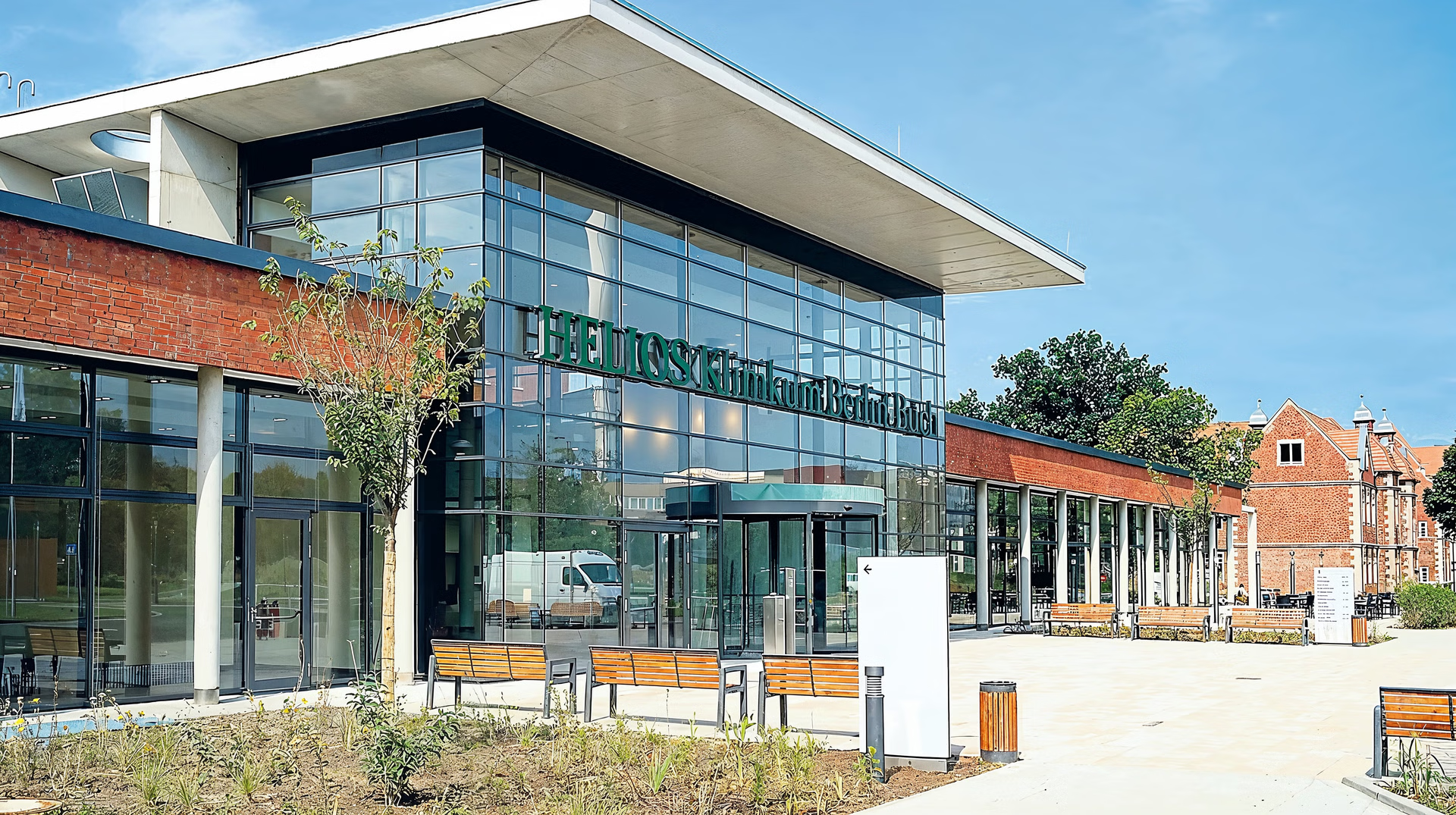
MIBG Therapy | Helios Clinic Berlin-Buch, Germany

MIBG Therapy | Helios Clinic Berlin-Buch, Germany
9.90

Berlin, Germany

5
User ScoreRatingMedia Files
98%9.9/105

Overview

Age group

Kids, Adults

Type of care

Inpatient

Method

Non-surgical

About the offer

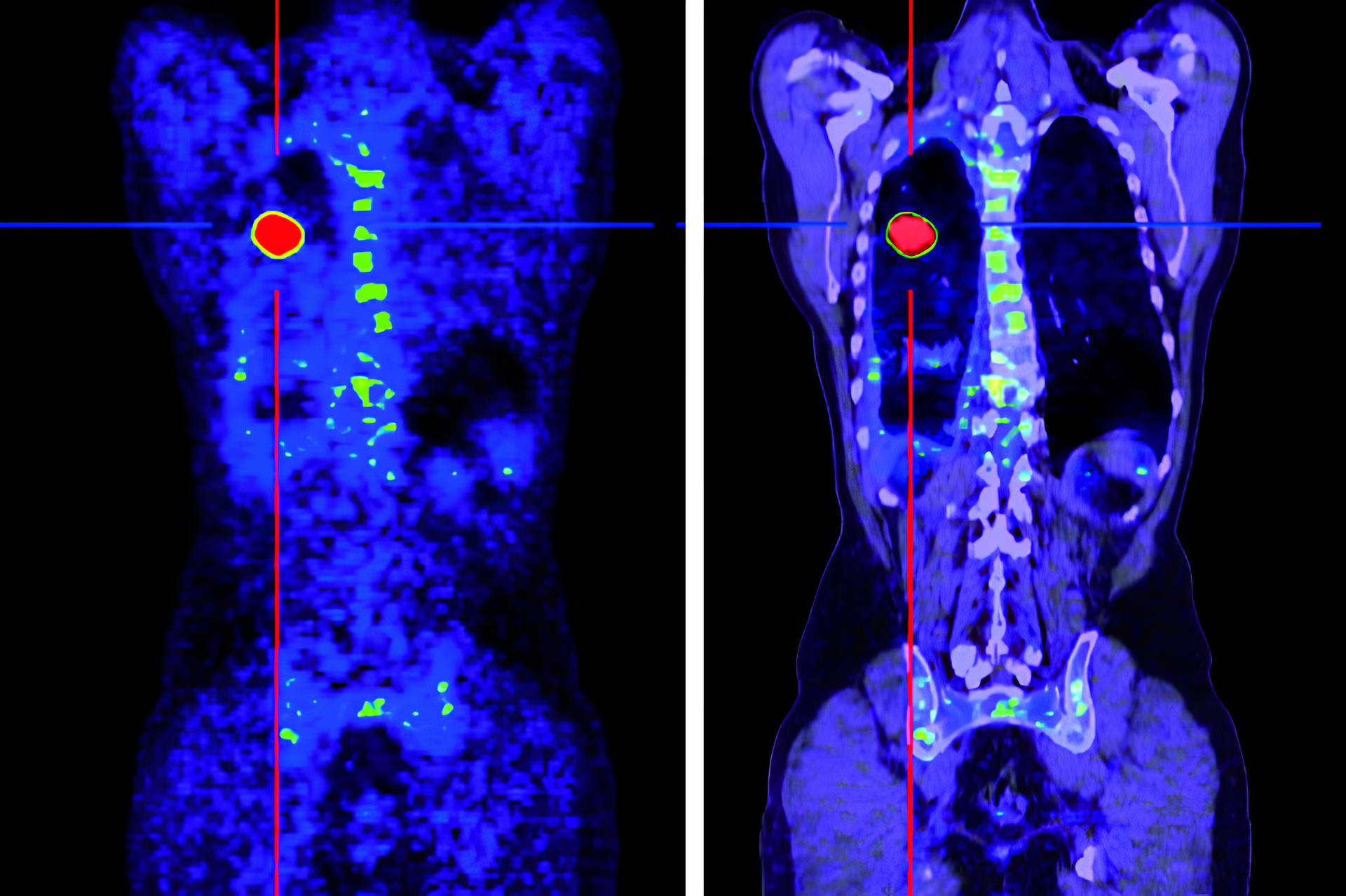
MIBG therapy is a targeted radionuclide treatment used in selected neuroendocrine tumors that can actively concentrate meta-iodo-benzyl-guanidine (MIBG), also called iobenguane. MIBG is chemically similar to adrenaline and noradrenaline, so it is taken up by adrenergic (sympathetic) tissue and, in the right tumor types, by tumor deposits that share this biology. For therapy, MIBG is coupled to iodine-131 so that, after the compound is absorbed into the tumor, the radioactive component can irradiate the tumor from within. Uptake is described as occurring within minutes, while the radiation remains present for days because iodine-131 has a physical half-life of about 8 days. The emitted radiation has a short tissue range measured in millimeters, which supports the clinical intent of concentrating dose within tumor sites while limiting exposure to surrounding structures. The most established clinical targets are neuroendocrine tumors of “neuronal type,” particularly neuroblastoma, pheochromocytoma, and paraganglioma. Use can be considered in other malignancies only when they demonstrate increased MIBG accumulation; medullary thyroid carcinoma is a commonly referenced example of this “MIBG-avid only” category. A diagnostic MIBG study is central to selection because treatment depends on demonstrable tracer uptake in disease sites. Contemporary guidance for pheochromocytoma and paraganglioma imaging explicitly notes that I-123 MIBG scintigraphy helps identify candidates for I-131 MIBG therapy, and clinical pathways typically require confirmation of sufficient uptake before committing to therapeutic administration. The therapy is framed as palliative, aimed at shrinking tumor tissue and slowing growth, with the expectation of cure explicitly excluded and a potential delay of progression described for a subset of cases. It is an inpatient radionuclide admission lasting approximately three to six days. The radiopharmaceutical is administered via an indwelling venous cannula as an infusion over roughly two hours, with continuous blood pressure and ECG monitoring because hypertensive crises can occur during therapy, particularly in hormonally active disease; medication is available to manage such episodes. On discharge day, whole-body scintigraphy is performed to document radiotracer distribution, and laboratory monitoring is considered routine follow-up.

What’s included

Medical service

Examination
  • clinical history-taking
  • medical records review
  • physical examination
  • consultation with a nuclear medicine specialist
Laboratory tests
  • complete blood count (CBC)
  • biochemical analysis of blood (kidney and liver function tests, electrolytes)
  • inflammation blood tests
  • urinalysis
Diagnosis
  • diagnostic MIBG Scan
  • I-123 MIBG scintigraphy
  • CT/MRI scan
  • whole-body scintigraphy
Treatment
  • pre-procedure patient preparation
  • MIBG (meta-iodobenzylguanidine) therapy
  • ECG monitoring
  • post-procedure care
  • control examinations
  • symptomatic treatment
Other
  • cost of radiopharmaceuticals
  • cost of essential medicines
  • cost of essential materials
  • hospitalization in a standard room (up to 5 days)
  • nursing service
  • discharge medical records
  • further recommendations

Extra add-ons

Local transportation
Airport transfer
Shared room
Hospital meals
Personal coordinator

AiroCare

AiroMedical support
Payment protection
Patient advocacy
Price match

Meet the provider

Prof. Dr. med. Stefan Dresel

nuclear medicine, radiology, radiation therapy, theranostics

9.90
Excellent

Gallery

Customize this offer

If you're not seeing exactly what you need here, send your custom request. You can discuss the content, specifics, price & timeline to create a personalized plan.

Location

Schwanebecker Ch 50, 13125 Berlin, Germany

FAQ

What cancers can be treated with MIBG therapy?

MIBG therapy is suitable for neuroendocrine tumors of the “neuronal type,” specifically neuroblastoma, pheochromocytoma, and paraganglioma, and it may also be considered for other malignancies that show increased MIBG accumulation, such as medullary thyroid carcinoma.

When is MIBG therapy used in the treatment timeline?

It is a palliative, later-line option, typically discussed when surgery or local procedures are no longer suitable and when disease biology and spread make other approaches less effective or feasible.

What is the rating of the offer?

MIBG Therapy | Helios Clinic Berlin-Buch, Germany is rated as 9.90 by AiroMedical.

Who is offering a deal?

How long does the offer take?

The offer is designed for 5 days.

Does the offer require you to stay in the clinic overnight?

Where can I see the media files?

What are the age restrictions?

The offer is eligible for both adults and kids.

Can I customize the content of the offer?

Yes, the components of the deal can be changed. Get in touch with a vendor to create a personalized proposal.

Does the offer include extra services?

MIBG Therapy | Helios Clinic Berlin-Buch, Germany has 16 add-ons and unique AiroCare services for AiroMedical users.

Individual cost estimate. Non-binding 100% free assessment.
On request

Similar deals