
New Combination Therapy at Medias Clinic Shows Promising Results in Difficult-to-Treat Breast Cancer
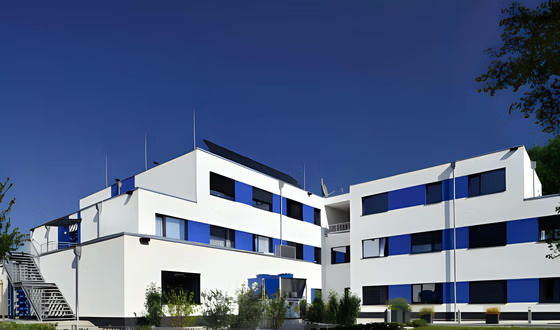

A new combination therapy for the treatment of difficult-to-treat breast cancer has been developed at the Medias Clinic and has shown promising results in a clinical trial. The aim of the method is to treat tumors in a targeted manner with minimal side effects. The therapy combines electrical impulses with regional, intra-arterial chemotherapy and leads to a significant reduction in tumor size in many cases. What is particularly noteworthy is that even tumors previously considered inoperable could be significantly reduced in size using this method, making surgery possible.
Triple-negative breast cancer (TNBC) is one of the most aggressive forms of breast cancer. It affects about 15 percent of patients and is known for its poor prognosis. Since this form of breast cancer does not respond to hormone or antibody therapies, patients often have limited treatment options.
Conventional therapies reach their limits, particularly in the case of locally advanced, inoperable tumors, which are often accompanied by painful ulcers or bleeding. At the Medias Clinic, an innovative combination therapy has now been developed that offers patients a new perspective.
Combination therapy: Permeable tumor cells, targeted effect
The new method developed at Medias Clinic combines reversible electroporation with regional chemotherapy. Electrical impulses make tumor cells more permeable to chemotherapeutic agents, allowing the drugs to act directly on the tumor. Compared to conventional chemotherapy, the drug concentrations in regional chemotherapy are many times higher. At the same time, side effects are significantly reduced because the treatment is localized. This combination offers the possibility of overcoming tumor resistance and selectively shrinking tumors.
Study results: Significant tumor reduction with minimal intervention
The study at Medias Clinic included 14 patients with recurrent and/or chemoresistant breast cancer and an inoperable tumor. After the treatment cycles, an average tumor reduction of 45 percent was observed. In two cases, the tumor was completely regressed, and in four patients, complete tumor removal through surgery was possible. The therapy was well tolerated: no serious side effects occurred.
Common side effects of classic chemotherapy, such as nausea, hair loss, and infections at the catheter site, were rare.
“The combination of reversible electroporation and regional chemotherapy has proven to be an effective and well-tolerated treatment method. Particularly noteworthy is that we can often shrink tumors previously considered inoperable to such an extent that complete surgical removal becomes possible. For patients with difficult-to-treat breast cancer where the primary tumor causes severe pain or bleeding, this procedure is a promising option,” summarizes Prof. Dr. Karl R. Aigner, Medical Director and Chief Physician at the Medias Clinic in Burghausen, regarding the study results.
Further information about the study can be found here: Aigner, K.; Selak, E.; Pizon, M.; Aigner, KR Arterial Infusion and Isolated Perfusion in Combination with Reversible Electroporation for Locally Relapsed Unresectable Breast Cancer. Cancers 2024, 16, 3991. https://doi.org/10.3390/cancers16233991