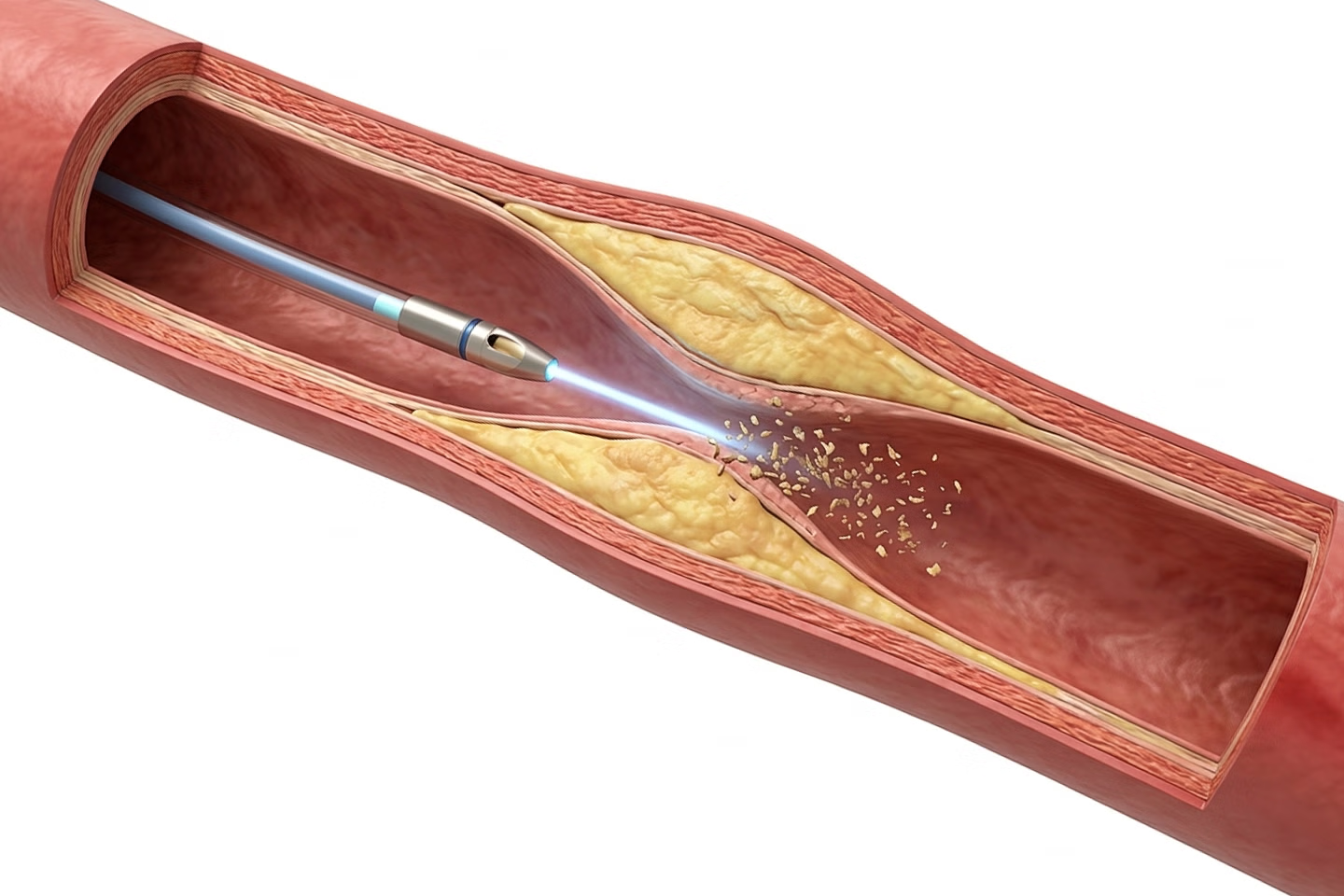
The Interventional Radiology Clinic at the University Hospital Frankfurt provides highly specialized, technologically advanced treatment for peripheral arterial occlusive disease using excimer laser-assisted angioplasty (ELA). This procedure is specifically designed for patients suffering from significant blood flow obstructions in the legs, a condition often referred to as intermittent claudication or, in more severe stages, smoker's leg. By utilizing the latest generation of vascular imaging, including the AI-supported Siemens ARTIS icono system, the clinic ensures that these minimally invasive interventions are performed with maximum precision, reduced radiation exposure, and optimized contrast agent doses. Peripheral arterial occlusive disease is a progressive condition in which atherosclerosis narrows or completely blocks the arteries supplying the extremities. While traditional treatments often rely on percutaneous transluminal angioplasty, which uses a balloon to compress plaque against the vessel wall, the University Hospital Frankfurt employs ELA as a superior debulking strategy. Unlike a balloon, which simply displaces the obstructive material, the Excimer laser actively removes it. This is particularly critical because conventional balloon angioplasty often results in high restenosis rates, in which the vessel narrows again shortly after treatment due to the elastic recoil of the plaque or the body’s inflammatory response to the pressure. The technical foundation is based on the principle of photoablation. The system emits pulsed ultraviolet light at 308 nm. These high-energy photons can break the molecular bonds in arterial plaque without generating significant heat. This athermic process is a vital safety feature, as it prevents thermal damage to the surrounding healthy vessel wall. When the laser energy hits the blockage, the material is converted into microscopic particles smaller than 10 micrometers. These particles are so fine that they are naturally cleared by the body's immune system without risking clogging downstream capillaries. The success rates for ELA at the University Hospital Frankfurt are highly dependent on the anatomical location and the length of the vascular blockage. In the pelvic region, the clinic achieves a successful recanalization rate of 94. 3%, which remains high at 78% even for occlusions 3-7 cm long. These procedures are typically followed by localized balloon angioplasty or stent implantation, especially if residual narrowing of more than 50% or vessel dissections are detected. In the superficial femoral artery, the primary success rate for stenoses or occlusions up to 3 cm in length is approximately 95%. For longer blockages of 3-7 cm, the success rate remains above 90%. As the complexity increases, the success rate is roughly 76% for lengths between 7 and 12 cm, and approximately 71% for very long occlusions ranging from 12 to 42 cm. In these cases, the laser treatment is a critical preparatory step that reduces the risk of vessel wall tears during subsequent balloon dilatation. For the popliteal artery and the trifurcation area, the clinic reports a primary success rate of approximately 72%. Due to the delicate nature of these vessels and the high prevalence of concurrent disease in the lower leg, the specialists in Frankfurt prefer a "stand-alone" laser recanalization using 6F or 7F multifiber catheters. In this specific anatomical region, the laser is used without subsequent ballooning to avoid mechanical trauma to the vessel walls. It is the preferred method for treating long-segment occlusions (greater than 5 cm) and heavily calcified hard plaques that a standard guide wire or balloon cannot penetrate. Furthermore, ELA is the gold standard for treating in-stent restenosis. When a previously implanted metal stent becomes blocked by the growth of new tissue (neointima), the Excimer laser can effectively vaporize this tissue within the stent, restoring blood flow without the need for additional permanent implants. Patients undergoing this procedure at the Frankfurt University facility benefit from a therapy that prioritizes vessel preservation. Because the laser creates a smooth, wide channel through the obstruction, the resulting blood flow is laminar and stable. This reduces the mechanical stress on the artery and minimizes the risk of dissections (tears in the vessel wall) that often occur with high-pressure balloon inflation. By integrating this laser technology with high-resolution angiography and 3D imaging protocols, the clinic provides a comprehensive care pathway that spans from initial diagnosis to final restoration of mobility, significantly reducing the long-term risk of amputation and improving overall quality of life for patients with vascular disease.
What’s included
Medical service
Examination
clinical history-taking
medical records review
physical examination
consultation with an interventional radiologist
Laboratory tests
complete blood count (CBC)
blood type test (ABO, Rh)
biochemical analysis of blood (kidney and liver function tests, electrolytes)
TSH
coagulation/INR/PTT
Diagnosis
digital subtraction angiography or CT-angiography
Treatment
pre-interventional medical consultation and patient education
excimer laser-assisted angioplasty procedure using 308 nm Xenon-Chloride laser
intra-operative high-resolution imaging (Siemens ARTIS icono system)
supplementary percutaneous transluminal angioplasty / vascular stent implantation (on the indication, price is not included)
post-procedure care
final control angiography (KDSA)
symptomatic care
Other
doctor's fee
cost of essential medicines
cost of essential materials incl. specialized laser catheters (Multifiber 6F, 7F, or 9F)
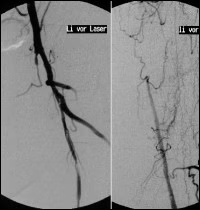
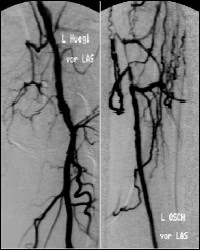
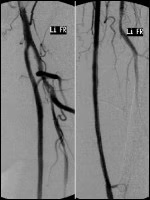
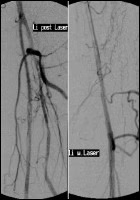
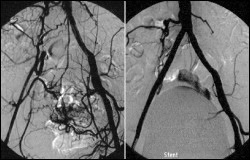
Arterial occlusion before and after laser treatment
2026-03-20T14:08:06.000Z
Arterial occlusion before and after laser treatment
2026-03-20T14:08:06.000Z
Customize this offer
If you're not seeing exactly what you need here, send your custom request. You can discuss the content, specifics, price & timeline to create a personalized plan.
Location
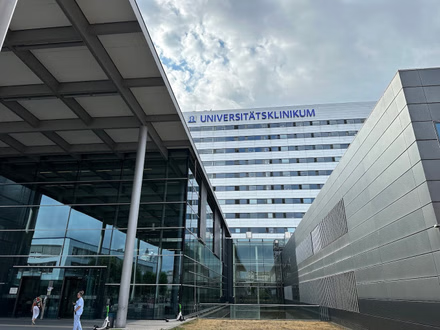
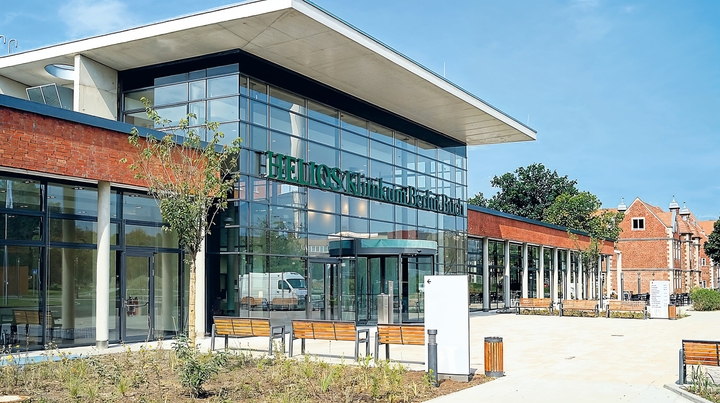
Theodor-Stern-Kai 7, 60596 Frankfurt am Main, Germany
FAQ
What is the rating of the offer?
Excimer Laser-Assisted Angioplasty (ELA) for Peripheral Arterial Occlusive Disease at Interventional Radiology Clinic at University Hospital Frankfurt is rated as 9.90 by AiroMedical.