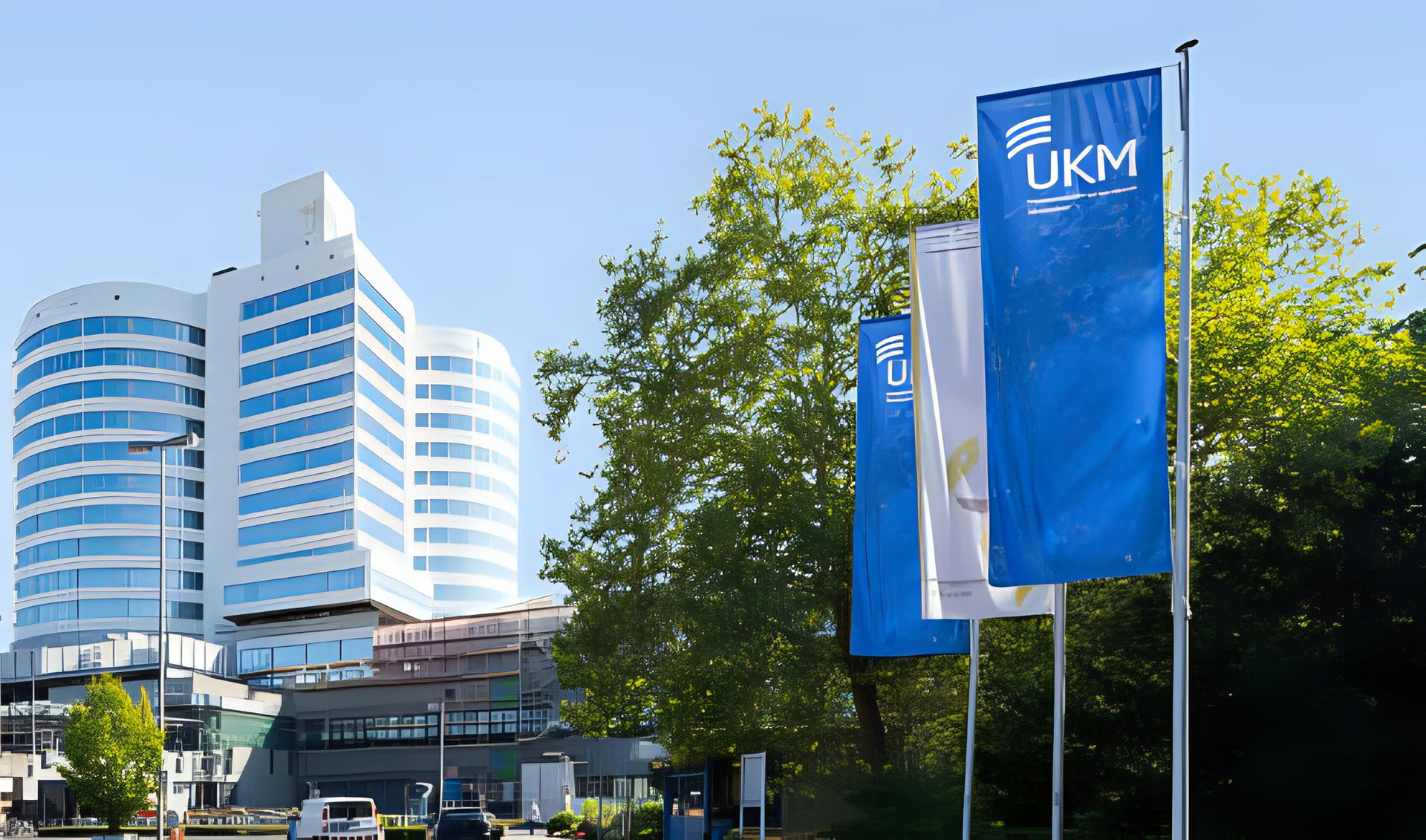
The institute was the first center in Europe to install IBA’s compact Proteus ONE proton therapy solution and was one of only two proton therapy centers in France at the time of commissioning.
Precision Planning for Radioresistant & Complex Tumors
With Proteus ONE and robust treatment planning, IMPT can treat radioresistant tumors such as chondrosarcomas and chordomas that require very high doses (up to around 74 Gy) and are often located near critical structures at the skull base or spine.
Number of High-Energy Patients
The IMPT treated its 1,000th patient with high-energy proton therapy in November 2024. The milestone covers patients treated with the Proteus ONE since the program began in 2016.
Adults & Pediatric Cases
Among the first 1,000 high-energy proton patients, 85% were adults and 15% were children or adolescents. The cohort came from the local region, other parts of France, and abroad.
Rare Skull-Base Cases
The active proton trial specifically includes skull-base and spinal chordomas and chondrosarcomas. It also includes Ewing sarcoma and osteosarcoma, reflecting IMPT's use for rare, difficult-to-treat bone tumors.
Advanced Motion Management for Moving Tumors
With a 4D CT scanner and the Sentinel respiratory tracking system, IMPT can image tumors that move with breathing and adapt treatment for selected thoracic and abdominal cancers, a significant advance for pediatric patients.
High Local Control
A 24-year NICE proton series of 492 large T3–T4 choroidal melanomas reported 94% local control at five years. The study used treatment delivered at the Center Antoine Lacassagne proton facility.
Patient-Friendly Accommodation
Patients coming from other French regions or abroad can stay at La Consolata, a residential structure directly linked to the center, where transport, accommodation, and treatment logistics are coordinated as part of their care.
132 CyberKnife Patients
A CyberKnife series treated 132 patients with primary lung tumors between 2006 and 2009. The median prescribed dose was 60 Gy, delivered in 1 to 5 fractions, depending on the treatment plan.
Active Testbed for New Beam-Monitoring Technologies
The MEDICYC and Proteus ONE beams are regularly used in instrumentation R&D, including recent work on ultra-fast plastic scintillator detectors for low-intensity proton-beam monitoring and range verification, demonstrating that the institute is not only a clinical unit but also a site of physics innovation.
About the clinic
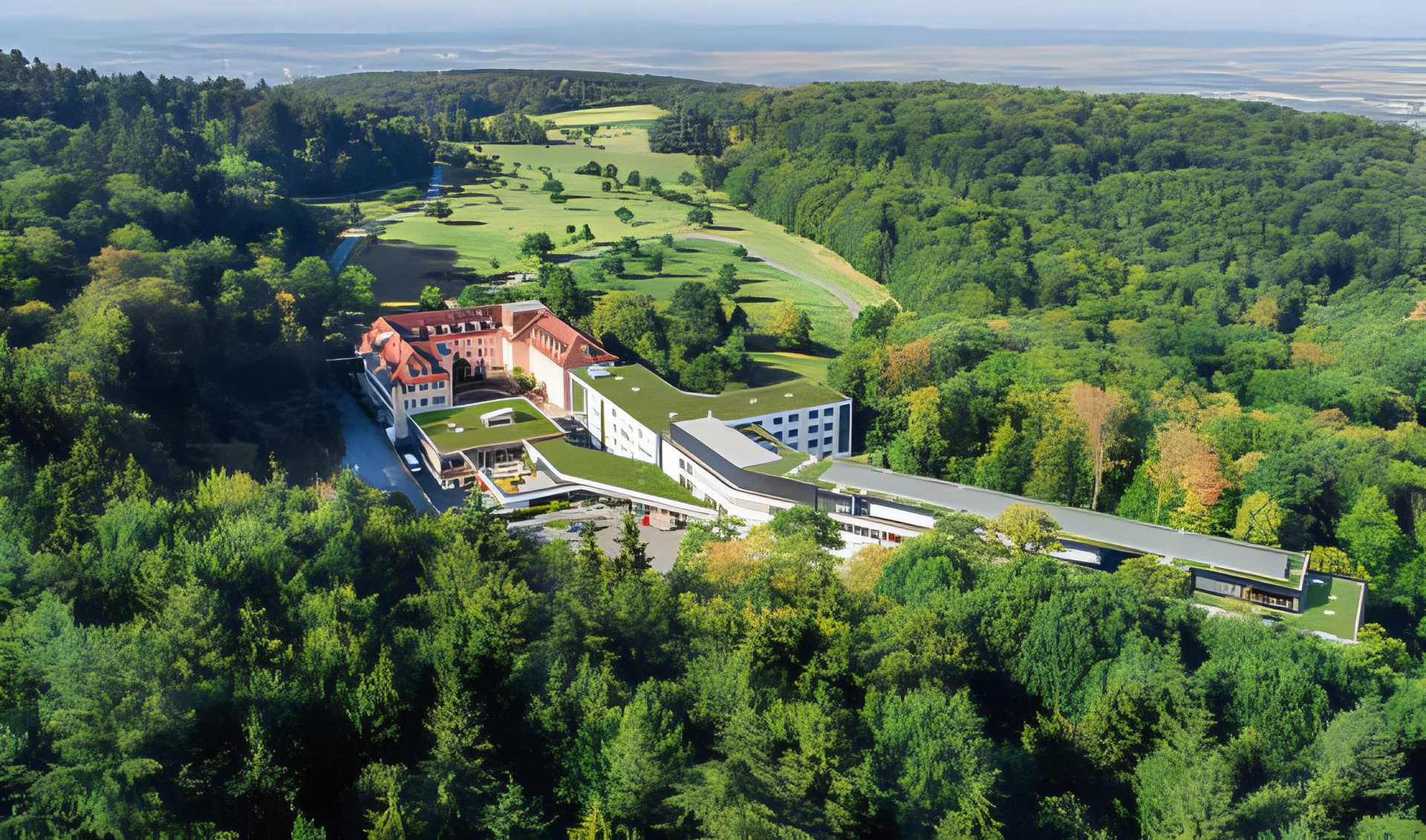
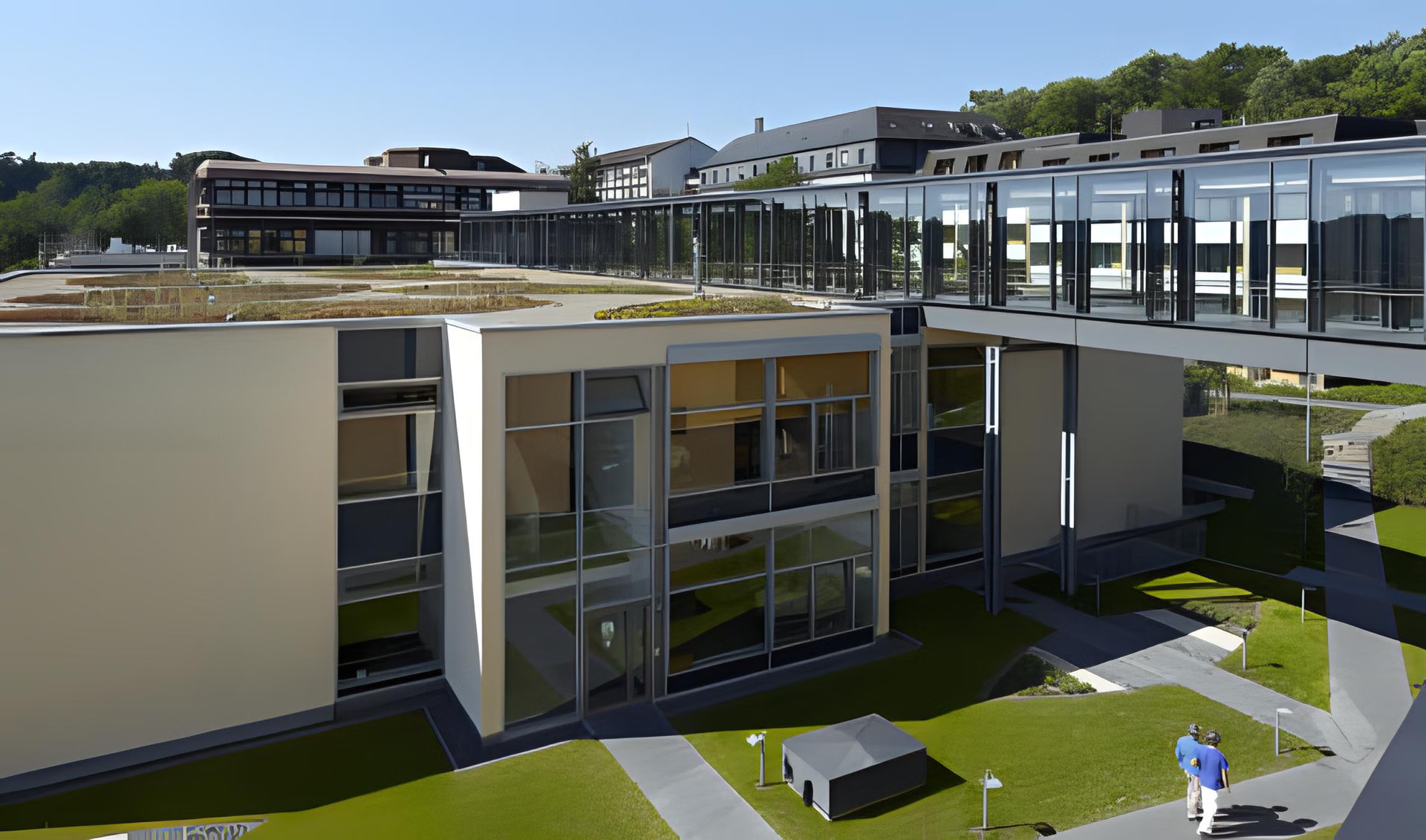
The Mediterranean Institute of Proton Therapy (IMPT) is the dedicated proton therapy center of the Antoine Lacassagne Cancer Center in Nice, set on the hills above the French Riviera. Patients arrive at a site that feels both clinical and contemporary: a compact high-tech campus where proton therapy, CyberKnife radiosurgery, and conventional radiotherapy sit side by side, so that each case can be matched with the most appropriate, finely tuned radiation technique rather than a one-size-fits-all approach. What makes IMPT distinctive is its dual proton platform. On one side is MEDICYC, a 65 MeV isochronous cyclotron dedicated primarily to ocular tumors since the early 1990s. It was at this facility that France’s first proton therapy treatment for an eye melanoma was performed in 1991. Over the decades, more than 4,500 ocular tumors have been treated there, giving the team one of the longest and largest experiences in eye proton therapy in Europe. Alongside MEDICYC, Proteus ONE is a compact, high-energy proton system (up to 235 MeV) equipped with a rotating gantry for deep-seated tumors. Installed at Nice as Europe’s first Proteus ONE site and among the earliest worldwide, it was commissioned in 2016 and later upgraded with cone-beam CT image guidance, making IMPT the first proton center in France to pair this technology with a Proteus ONE room. This combination allows millimetric, image-guided treatments for complex tumors of the brain, skull base, spine, and pelvis, as well as selected pediatric cases where tissue sparing is crucial. Because the two proton units are co-located within a large comprehensive cancer center, patients benefit from more than just sophisticated machines. Clinical pathways involve multidisciplinary decision-making, where professionals such as radiation oncologists, neurosurgeons, ophthalmologists, ENT surgeons, medical physicists, dosimetrists, and radiographers collaborate during tumor board meetings. Together, they evaluate cases to determine if proton therapy is appropriate and, if so, whether to use the ocular line or the high-energy gantry for the specific target. For an eye melanoma, this might mean a short course of highly focused treatment on MEDICYC, preserving the eye and often functional vision; for a skull-base chordoma or a pediatric brain tumor, it might mean several weeks of fractionated high-energy proton therapy with meticulous dose sculpting around the brainstem and optic nerves. IMPT’s philosophy is rooted in precision, not just in how beams are shaped, but in how tumor motion is understood and managed. Thanks to a 4D CT scanner and the Sentinel respiratory tracking system, the team can literally film tumors that move with breathing, building a time-resolved map of the lesion's location throughout the respiratory cycle. This information feeds into treatment planning so that fields can be gated or margins adapted, allowing proton therapy to be extended beyond static head-and-neck or CNS targets to selected thoracic and upper-abdominal indications, such as certain lung and liver tumors that benefit from the proton dose fall-off. Day-to-day, care is delivered by dedicated proton therapy teams embedded within the Antoine Lacassagne Cancer Center’s wider infrastructure. Patients have access to on-site imaging (CT, MRI, PET-CT), supportive care services, and, when needed, inpatient hospital departments, but many can remain ambulatory throughout treatment. For those who live far from Nice or abroad, practical support is available through nearby accommodation options, such as the patient lodge, which offers a hotel-style environment close to the center for individuals who do not require continuous hospital monitoring but need to stay near the machines for several weeks.
Patient safety in proton therapy: Dr. Jerome Doyen highlights ProteusONE’s benefits
2025-12-05T11:26:09.000Z
Patient safety in proton therapy: Dr. Jerome Doyen highlights ProteusONE’s benefits
Presentation of the ICAR research project: Prof. Jérôme Doyen, Oncologist, Radiotherapist
2025-12-05T11:25:19.000Z
Presentation of the ICAR research project: Prof. Jérôme Doyen, Oncologist, Radiotherapist
Jean-Michel Hannoun-Levi - The Great Debate session
2025-12-05T12:07:44.000Z
Jean-Michel Hannoun-Levi - The Great Debate session
Extra services
Kids' Play Zone
Support Groups
Digital Health Records
Location
227 Av. de la Lanterne, 06200 Nice, France
FAQ
How is the decision made that I should receive proton therapy at IMPT?
In France, your case is first discussed by a regional multidisciplinary tumor board, which determines the best overall treatment strategy and whether radiotherapy is indicated. If proton therapy seems appropriate, your file is then presented to a national radiotherapy board that specifically validates the indication for proton therapy. This national meeting takes place once a week.
What happens before my first proton therapy session?
After the national board approves proton therapy, IMPT arranges a first consultation with a radiation oncologist. Then you undergo a reference CT scan to determine the exact treatment position and to create a 3D reconstruction of your body, so the team can precisely define the areas to treat and protect. A detailed dosimetry plan is then calculated on a computer over several days, simulating the best combination of proton beams before any treatment is delivered.
How often will I have treatment sessions?
A course of proton therapy at IMPT usually involves one session per day, five days a week (Monday to Friday), over several weeks. There are no sessions on weekends or public holidays, so your schedule follows a regular weekly rhythm.
How is the care pathway different for children?
For children, the process includes a regional pediatric multidisciplinary meeting and a dedicated national radiotherapy board to confirm the use of proton therapy. Parents meet the radiation oncologist (and, if needed, a pediatric oncologist and pediatric anesthetist) during the first consultation. Special attention is given to immobilization, anxiety, and the need for anesthesia, and families receive age-appropriate explanations, including animated videos made by the center.
What is the rating of the clinic?
Mediterranean Institute of Proton Therapy is rated as 9.60 by AiroMedical.