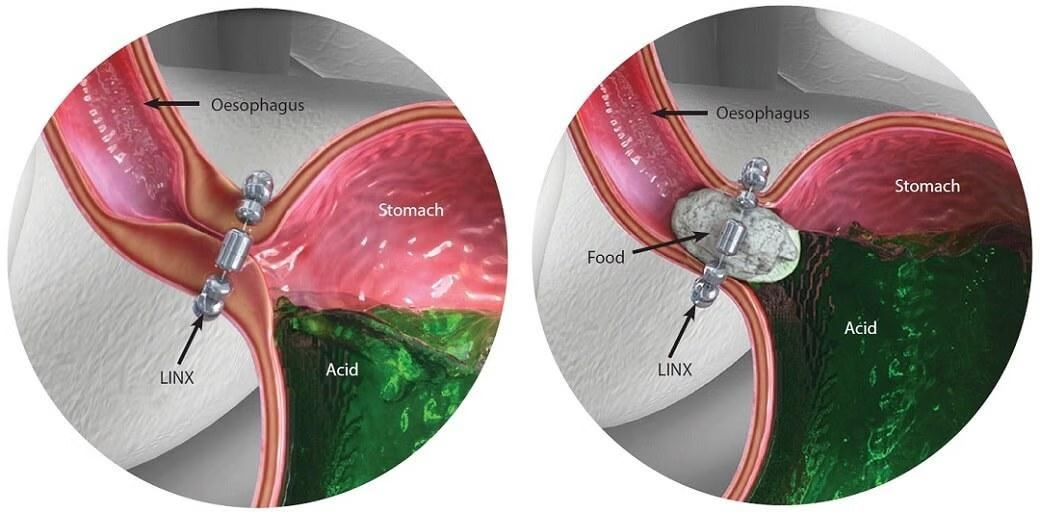
LINX magnetic sphincter augmentation is a minimally invasive surgical treatment for chronic gastroesophageal reflux disease. The procedure uses a small, flexible ring of titanium beads with magnetic cores that is placed around the lower end of the esophagus, just above the stomach. The magnets help keep the lower esophageal sphincter closed to prevent acid and bile reflux, while still allowing it to open naturally during swallowing, belching, or vomiting, thereby preserving more physiologic function than traditional “wrap” procedures in appropriately selected patients. In GERD, the barrier between the stomach and the esophagus becomes weakened, allowing stomach contents to flow back into the esophagus and irritate the esophageal lining. The LINX device reinforces this barrier by adding gentle, dynamic resistance at the gastroesophageal junction. When the patient swallows, the magnetic beads temporarily separate to allow food and liquid to pass, then return to a closed position to reduce reflux episodes. By restoring a more reliable closure mechanism, LINX aims to reduce heartburn, regurgitation, chronic cough related to reflux, and dependence on long-term acid-suppressing medications when conservative therapy has not provided adequate control. Before scheduling surgery, our physicians complete a structured pre-operative workup to confirm that reflux is the actual cause of symptoms and to ensure the esophagus can generate sufficient motility to push food through the reinforced junction. Blood tests are obtained, and liver and kidney function are assessed as part of anesthesia clearance and overall safety screening. The diagnostic package includes upper endoscopy to evaluate inflammation, ulcers, Barrett’s esophagus, and anatomical factors such as hiatal hernia, as well as objective reflux testing to quantify acid exposure. Esophageal manometry is performed to measure esophageal muscle function and coordination, and additional imaging studies may be used to map anatomy and support operative planning. All required pre-procedure diagnostics are coordinated within the comfortable pathway, enabling the patient to complete the evaluation efficiently and maintain continuity of care. Our team ensures that each diagnostic step is performed by experienced specialists and reviewed in a multidisciplinary manner to confirm suitability for LINX and to tailor the surgical approach to the individual anatomy and symptom profile. Before the operation, the patient is admitted to a private room with full amenities designed for comfort, privacy, and rest. An accompanying person may stay with the patient, and our staff can assist with practical arrangements to minimize stress during hospitalization. The surgical team conducts a final pre-operative assessment, reviews imaging and functional test results, and confirms perioperative plans, including medication management, fasting instructions, and postoperative nutrition strategy. LINX implantation is performed under general anesthesia, most commonly using a laparoscopic approach through small abdominal incisions. During the procedure, the surgeon positions the device around the lower esophagus and, when indicated, corrects an associated hiatal hernia to optimize reflux control and device performance. The operation is designed to be tissue-sparing and focused, with careful attention to preserving normal anatomy while reinforcing the reflux barrier. After surgery, the patient is monitored in a recovery area and then returned to the private room for continued observation. Many patients are discharged the same day or after a short hospital stay, depending on clinical status and individualized safety criteria. Our clinical team actively manages pain control, nausea prevention, hydration, and early mobilization to support smooth recovery and reduce complications. A key element of LINX aftercare is guided nutrition and swallowing adaptation. Transient swallowing difficulty can occur as the body adjusts to the augmented sphincter. Our team provides structured dietary instructions to support safe swallowing and optimal device function. Follow-up assessments focus on symptom relief, ability to eat comfortably, medication reduction strategy where appropriate, and the early recognition and management of side effects such as temporary dysphagia or chest discomfort. If swallowing symptoms persist beyond the expected adjustment period, additional evaluation and targeted interventions, including endoscopic dilation in selected cases, can be arranged. LINX surgery is generally considered for patients with objectively confirmed GERD who continue to experience significant symptoms despite optimized medical therapy and lifestyle measures, or for those who wish to reduce long-term reliance on acid-suppressing medications when clinically appropriate. It is particularly relevant for patients whose primary complaints include regurgitation, volume reflux, persistent heartburn, or reflux-associated respiratory symptoms, provided that diagnostic testing confirms reflux as the underlying cause and that esophageal motility is adequate. Final eligibility is determined through the pre-operative workup, including anatomic and functional evaluation, since certain conditions may require alternative approaches. Our physicians will discuss whether LINX, fundoplication, or other strategies are best aligned with the patient’s anatomy, symptom pattern, test results, and goals.
What’s included
Medical service
Examination
clinical history-taking
medical records review
physical examination
consultation with a surgeon
consultation with an anesthesiologist
Laboratory tests
complete blood count (CBC)
blood type test (ABO, Rh)
biochemical analysis of blood (kidney and liver function tests, electrolytes, glucose)
If you're not seeing exactly what you need here, send your custom request. You can discuss the content, specifics, price & timeline to create a personalized plan.
Location
Kurstraße 11, 14129 Berlin, Germany
FAQ
What is the rating of the offer?
LINX Surgery - Reflux Management System | MIC Hospital, Berlin, Germany is rated as 9.70 by AiroMedical.